Tuesday, October 30, 2012

Maybe Market Share Matters For GM After All?

I love looking at market share numbers. To me, it’s the most important sales indicator — since it is the true barometer of a firm’s performance in its industry. It is the one measure that disregards all economic factors and influences from the company’s performance and serves as the scoreboard to my favorite sport — the game of making, and selling, cars.

Every month, auto makers hit the limelight in releasing their latest sales figures to investors, analysts, and industry pundits. We report on these at GM Authority in our By The Numbers segment. In GM’s case, you’ll see Kurt McNeil on CNBC at the beginning of the month discussing the sales results of GM’s various brands, along with the growth and conquest sales. What you don’t hear much about, though, is GM’s market share or retention numbers. That’s because despite all the new products and marketing strategies that The General employs, as well as the billions of dollars it spends in attracting new customers, GM has been losing market share. Despite all of its efforts, General Motors’ share of the market has been declining — not increasing — in the U.S.

Year to date, GM holds an 18 percent market share compared to 20 percent through the same time period (third quarter) of 2011.

Numbers In Context

When GM reports increases in unit sales, those can usually be attributed to an expanding economy. As the economy expands, it stands to reason that any company’s sales will grow accordingly — regardless of what sales or marketing strategies are in place.

Increases in unit sales have traditionally been used by many companies to show that a company’s health is improving. Some might be convinced that things are on the upswing, but the danger in relying on unit sales alone lies in the management’s satisfaction in the sales increases — even in the face of the possibility that competitors are slowly grabbing existing customers and/or the undecided who are in the market for a new vehicle.

How Does One Increase Market Share?

In the automotive industry, increasing market share is so much more than having a good promotional strategy for a widely desired product. It is also about meeting industry attributes such as unit pricing, service quality, communication, and real retention programs. I am still bewildered about how little focus is placed on customer retention around the industry.

For its part, General Motors has created a VP position to manage customer retention. It has been a year now and we have seen very little from that initiative. Don’t agree? Simply walk on in to any GM dealership and tell me what is dramatically different in how you are treated now compared to three years ago, or even one year ago.

Have there been any change to the CSI (Customer Satisfaction Index) program since GM went bankrupt? That program is so rife with GM’s old ways, including bullshit reporting to management, and unfair rewards/penalties to dealerships and their employees, that it should be eradicated and rebuilt from scratch.

All of this is to point out how important it is to plug the hole at the bottom of the water bucket (customers defecting to other brands) while spending billions of dollars in marketing to fill the bucket in the first place (attracting new/conquest customers). Despite spending a significant amount of money, the water level in the bucket is not rising, and eventually, the company will pay for it when the market contracts.

Improved Product Doesn’t Mean A Thing

And while GM has made several high-profile changes throughout the organization, could it be that the arrogance at General Motors is still alive and well in the lower ranks? At the least, you may say, GM’s product has substantially improved… but truth is, everyone is delivering great product these days.

If General Motors really wants to demonstrate its health in relation to its competitors, it has to improve and/or increase its retention efforts to ensure that existing customers return. Keeping existing customers while conquesting new ones is the name of the game… otherwise, conquest sales don’t mean a thing, and more money is being wasted to attract new customers rather than retaining existing ones.

Posted via email from Hylton Jorssen's posterous

Friday, June 24, 2011

The New GM: New Directives With Old Middle Management Ways


This article is part of the GM Authority Opinion Desk series, where you can see exactly what’s on the minds of the GM Authority crew.


It seems that only yesterday GM claimed bankruptcy and re-emerged as “The New GM”. Two years later, is the New GM’s marketing approach any different than that of the old GM?

Consisting of a healthy mix of insiders with international experience as well as outsiders from other automakers and non-auto industries (such as tech firms), it’s safe to say that GM’s senior management has turned a new leaf. GM’s board has also become an eclectic mix of individuals with diverse backgrounds. All this is to say that I believe GM has the proper “directive” moving forward. I’ve read just about everything that has come out of the RenCen and there is very little rhetoric that I do not agree with.

Between A Rock And A Hard Place Lies…

But underneath “Mahogany Row” lies what is known as middle management. These are the folks who have the mandate to carry out the directives set out by senior management while ensuring that employees develop in such a way that they can contribute to the organization in a more meaningful way. Middle management positions are probably the most challenging in one’s career, requiring the execution of direction while putting out fires that senior management find petty (yet employees find significant). Directors need to have a strategic outlook while, at the same time, being tactical… good luck with that.

Managing Change

So how does a Director go about ensuring that his/her team successfully executes a mandate while growing individuals? It really comes down to the Director’s ability to manage change. Managing change is so much more than introducing a new process, strategy or technology (all of which GM has been doing over the past few years). It’s also about constantly introducing new team members to existing ones. This is known in the corporate world as “cross-pollinating” — one of the essential elements to nurturing innovation. Simply put, the same people doing the same jobs will net you the same results. It is simply a non-starter to assume that someone can change their thought process in a substantial fashion just because a company has re-branded itself.

For instance, let’s take a look at GMNA’s marketing division: individuals change positions either when a new product is launched or when someone leaves the company. This approach is no different from that of the Old GM: instead of moving a Marketing Manager to a different product line after three or four years (optimum in my opinion), General Motors continues its old ways of “keeping a seat warm.” For example, moving the Impala Marketing Manager to the Camaro brand would actually benefit not only the individual (in being introduced to a new team, approach and customer), but it would also benefit the organization as a whole due to the individual employee gaining a broader perspective on the subject of marketing in general. Unfortunately, GM currently moves marketing positions only when someone leaves.

And while many tend to think of marketing as advertising, today’s marketing discipline also encompasses product planning, pricing, content, deployment, and resolution management (just to name a few). And since advertising for car companies today are now handled by outside agencies like Campbell-Ewald and The Omnicom Group, marketing teams can now place increased focus on the product itself.

Engineers As Marketers

One initiative that I appreciate, however, is the amount of engineers found on the Volt marketing team. For starters, this provides a more detailed quality of product communication for the customer. What’s more, engineers in general tend to not be spin doctors — a set of skills that organizations have cherished at a time when the internet did not exist and customers could only attain information from the firm itself.

As such, moving engineers into the marketing field of a company sets up a well-rounded resource that provides both mathematical and artistic experience. In addition, bringing in resources from the competition or even companies outside the automotive sector such as Apple, Microsoft or Cisco (to name a few) will further stimulate innovative marketing initiatives thanks to cross pollination.

Cross Pollination A Must When It Comes To Middle Management

In the same way that GM has rebuilt its senior management team through cross pollination, it must do the same with the marketing and sales teams as well. Failure to do so on a more frequent basis will only result in the same old GM marketing doing the same old things in a rapidly changing environment in which Volkswagen, Ford, Kia, and Hyundai are growing market share at an astonishing rate.

At the end of the day, cross pollination must occur on a more rapid basis if General Motors truly wants to create its leaders of tomorrow while being the leading automaker it set out to be after bankruptcy proceedings.

Posted via email from Hylton Jorssen's posterous

Monday, March 14, 2011

The #Chevrolet #Volt: Society's Paradigm Shift?


Many of our younger readers don't quite realize how far the automotive industry has come with respect to the design of electric vehicles. Since the 70's, we've seen all sorts of EV's - some looking like small wedged cube with lawnmower wheels to something trying to resemble a bug-eyed tadpole. An EV's attractiveness and practicality from the consumer's standpoint always took a backseat to wind tunnel results and vehicle size/weight. Volt engineers and designers went through considerable effort to deliver an electric vehicle which still maintaining the look of a gasoline vehicle. Friction resistant tires, clever aerodynamic body lines and innovative technology all work together to allow the owner a zero compromising experience.

Is the Volt pricey when looking at the product from a budgetary standpoint? It is - after 8 years of ownership, you would have more money in your pocket if you bought a cruze ltz  vs. the volt. But this is where we as a society really needs to think about the long term impact which such a decision will have on our future. I simply bring up flat screen TV's as an example of what happens to an industry when society accepts new technologies. 10 years ago, many 42 inch flatscreen televisions were selling for well over 5K. Today you can buy them with better quality for well under 20% of the price 5 years ago. Had we not purchased those expensive flatscreens (compared to the Cathode Ray Tubes which were far cheaper at the time) we would all most likely still be watching (CRT) televisions. The popularity brought the cost of the new technology down while at the same time, allowed the manufacturers of flatscreens to advance in the areas of liquid crystal display, plasma, digital light processing and the latest kid on the block - organic light emitting diode. The quicker we accept the technology, the cheaper and better it gets. Pick an industry and this rule will always be proven.

Our decision to buy or reject the Volt, will have the same impact on the advancement of alternative energy. Should the Volt succeed, it will not only advance innovation in the auto industry, it will also trigger other industries to follow suit. The faster the volts success, the faster society benefits from technological advancement. Companies which develop motorcycles, yard maintenace tools for landscapers or machinery for constructrion companies will be forced (through competitive and market forces) to develop non internal combustion engine (ICE) products. Those companies which decide to ignore the market shift, will eventually meet the same fate as The Smith-Corona Typewriter Company when it ignored the acceptance of the personal computer with the consumer and the business world.

The real question is - are we perceptive enough as a society to understand how much influence we have on our future standard of living by buying the volt? Do we understand that we have the power to rapidly change our energy needs including our dependence on foreign oil? Do we understand how the positive change we can have on the environment 10 years from now? Perhaps we are still a few years out before people see the impact vehicles such as the Chevrolet Volt will have but change must start somewhere and it's great to see General Motors at the forefront of innovation once again.


Posted via email from Hylton Jorssen's posterous

Friday, January 14, 2011

GM's Chris Preuss: Flying under the radar at Mach Z...........

This article is part of the GM Authority Opinion Desk series, where you can see exactly what’s on the minds of the GM Authority crew.

Those who “think” they know me often state that I am extremely opinionated. Well, opinionated I am — and I wish more Americans spoke their minds. I pride myself on being very honest in my opinions since we live in a world where the “no spin zone” is nothing but. And while I typically don’t like to write about the performance of GM’s senior management, today I am going to bend my own rules to discuss the performance of OnStar President, Chris Preuss

Most senior managers of large corporations have a difficult decision at hand when filling key positions. It’s difficult for a number of reasons but one of them is trying to find a candidate who not only fully understands the direction in which the corporation wishes to grow but who also brings to the table a unique perspective that can be used to take the initiatives that have been started and move them forward. To that point, Mark Reuss (pronounced Royce) has done a wonderful job in selecting Chris Preuss (pronounced Pruce) as OnStar President.

Expansion By Leaps & Bounds

In the short time that Preuss has taken over the reigns at OnStar, he has taken the technology used to support the telematics firm’s safety features and expanded it by leaps and bounds to include features that provide increased convenience to the public. For example, check out the videos at the end of this article. These OnStar videos give viewers a great understanding about the ways in which information and functionality can be enhanced between you — the driver — and your car. In addition, future OnStar features will allow users to send and receive email, Facebook, Twitter and text messages — which, although controversial, is a welcome feature. Personally, I would gladly buy GM’s heads up display option (HUD) if I could use it to flash one-line text instead of using it to see my car’s speed or engine RPM, as the feature currently provides. At the end of the day, I am way too busy as it is — getting information as quickly as possible is vital to me and my business interests.

You Ain’t Seen Nothin’ Yet…

Other new OnStar developments include offering the service to non-GM customers as well as owners of GM vehicles whose cars have not left the factory as OnStar “ready”. This will undoubtedly not only increase the revenue stream for OnStar but also widen its R&D spend due to playing in a new market segment. The result of OnStar’s business development in such a short period of time has turned the service from a safety feature completely dependent on current General Motors customers to a safety and communications product available to the automotive market at large. I could go on and on here in what this positive direction means for the corporation, but it’s safe to say “you ain’t seen nothin’ yet”.

Social Is The (New) Reality

Chris has a long history in communication: in fact, before taking the reigns at OnStar, he was General Motors Vice President of Global Communications. In that role, he was largely responsible for getting General Motors out of the dark ages of communication and into social media — the reality of today’s communication between consumers. Believe me when I say that was no easy task. It’s quite common to see some of GM’s key product personnel taking to the “net” through Twitter, Facebook, LinkedIn and 100′s of enthusiast sites and forums. The reality of global communications today and — in particular the Internet — is that people are rapidly moving in the direction of non verbal communication. Their preference for this type of communication is based on factors such as cost, speed, convenience, the ability to interact anonymously, as well as the general love of knowledge and the ability to reference old communication that a traditional phone call simply can’t provide (Google Voice aside, of course).

The Internet has forced businesses to rethink how the consumer interacts with one another as well as how information is disseminated, often at viral speeds. Internet forums have now replaced “Town Hall Meetings” and web messaging and blogs allow one person to instantly communicate with as big an audience as desired. As such, it’s clear that Chris Preuss saw the future and proceeded to perfectly deliver on GM communication strategy, leaving those that followed him a wonderful canvas to work from.

The one common thread in both these positions is communication — and to that point — Chris has that experience in spades. What impresses me most about him, however, is not his strength in communications but — more importantly — his ability to take what is given to him (successful but dated) and turn it into a major industry game change. This kind of behavior is rare in an executive. Often, executives play the “safe card” or manage the initiatives set by their predecissors. Preuss’ success has proven that he is willing to not only take risk, but be open to new ideas brought to him by the good GM people that you never hear about such as Mary Henige and Nick Festa.

General Motors will do well with executives such as Chris, who turn water into wine.

Posted via email from Hylton Jorssen's posterous

Tuesday, June 22, 2010

GM Dealerships: Let’s Stop Calling Them Customers Okay???


One thing that really burned my ass under Henderson’s reign was that he continuously referred to GM’s dealership network as “customers”.

Why did that upset me? Because if dealers feel that they are a customer and should be treated as such, it makes it impossible to put the end-consumer first. On top of that, it’s very difficult to implement new approaches to sales and service. In other words, where else would business (GM) try and tell a customer (a dealer) how to run their own affairs?

So if GM dealerships are not GM’s customers, what are they? Like the thousands of other companies with which GM builds relationships in order to produce and market the company’s vehicles, dealerships should be treated as suppliers: they are suppliers of marketing, suppliers of vehicle service and suppliers of sales service. In simple terms, GM dealerships provide a service to GM and multiple services – along with the ability to buy a product – to the consumer. If anything, the dealerships should be kissing GM’s butt (like some suppliers do) since it’s GM that allows them to earn a living.

It’s no secret that even after the failure and rebuilding of GM, it’s still business as usual at some dealerships. For example, it’s still common for dealers to employ sales reps who know less about the product than the customer walking through the door.

This one issue alone is reason enough for customers to dread the dealership experience. Consumers now see how much gobble-dee-gook a poorly educated sales rep is dishing them when they already know everything the salesman knows and then some. Problem is, the sales reps don’t realize what is occurring in this scenario and end up burying themselves and any deal.

Over the last 20 years, the buying habits of the American consumer has changed dramatically. How? We are now able to sit down in the comfort of our own homes and do our own research on our own time. We can make up our own minds about a vehicle to the point where the only reason for going to a dealership is to test drive something. But even the lack of a test drive will not stop people from ordering vehicles these days – GM had almost 12,000 Camaro orders before the first car was even built yet. That number would have been even higher had many consumers been able to by-pass the dealer.

Less known (even to GM brass) are the more unethical practices occurring in the trade surrounding the sale of their vehicles. For example, did you know that even though you custom ordered a vehicle to your specifications and put a deposit down, the dealer is under no obligation to sell it to you? In fact once the car arrives at the dealership, he is free to ask even more for the vehicle, citing “market conditions” as the reason for spiking the price. Keep in mind that this is despite the fact that you have a written contract (fine print is a bitch).

Last year, I was contacted by someone who had ordered a 2010 camaro back in September 2008. He had ordered it exactly as he wanted it and spent the entire winter dreaming about the shiny new Camaro that would be in his driveway shortly after they begun production in April 2009. Once his car arrived at the dealership, the salesman called him and told him to “come on over to sign the papers, the car is here!” How excited he was – he grabbed his particulars and headed down to the dealership. Once there, he was brought into the office and was told that the car would now be $3,000 more due to “market conditions”. It was $3,000 that he had not budgeted for and could not come up with. In the end, the deal went south and the car was put on the lot with a price above MSRP.

What was the result of this scenario? The dealer either got itself a short term spike in profit because someone most likely ended up paying more than MSRP; or the dealer got itself a lost sale that our would-be owner does not know about. For GM though, both scenarios resulted in one less customer for the next 10 years. If that customer turned around and bought a Mustang, their next car will most likely be a Ford as well and the individual will do nothing but curse the GM name to anyone who would listen. That’s the unfortunate part, the dealer is the face of GM and rarely does the customer comprehend the separation of the two.

So how can GM face the challenge of ensuring that good dealerships are properly recognized? First, they need to change their internal and dealer culture so that all clearly understand who works for whom. This simple change will allow GM employees who work on the sales side to come up with better strategies and programs that focus on the consumer as well as send a message to the dealerships that there are expectations to be met. Secondly, these new strategies must reward dealerships who perform well and penalize those who perform poorly. The “Turn-and-Earn” program is a good start but I don’t think it goes far enough on the penalization front. The CSI program has value except it is highly inaccurate due to only measuring those who purchased a car and not those who tried to purchase a car but left in dismay (huge gap). GM still has about 1,500 dealerships more than it really needs, so stripping someone’s franchise away should certainly be a possible outcome of poor performance.

GM must also better educate the consumer so that they understand poor service is not the normal practice with GM dealers and that certain practices (legal or not) are not something GM condones. Consumers understand that they have a choice in picking the manufacturer for their hard earned money but GM should also educate the consumer about the choice they have within the GM dealer network. Do you know which GM dealerships have the most awards and the reason the merit behind these awards? Me neither and it’s GM’s job to let you know before you decide to walk into a dealership. There’s only one customer and that’s you.

Posted via web from Hylton Jorssen's posterous

Wednesday, June 9, 2010

“OnStar, What Is Your Emergency?” I’ll Tell You What My Emergency Is…

You may have seen the OnStar commercial where the viewer is looking through the window of a cop car as it goes after a stolen blue Chevy Tahoe. The law successfully pulls over the Chevy after OnStar remotely starts blinking its lights. Strangely enough, of all the services that OnStar offers, the stolen vehicle recovery feature is what OnStar appears to promote the most. The commercial makes its point, but is it really going to motivate you to cough up a minimum of $200 per year for the service? Think about it… I thought that paying for vehicle theft recovery was covered through our cities’ policing budgets (that we pay for through taxes). And combined with my vehicle’s insurance policy, I think I’ve paid enough already. 

What Is OnStar?

As many of you know, I am the proud new owner of a 2010 Camaro SS which came with a one year trial of the OnStar service. This has allowed me to really get the warm and fuzzies for it. What is On Star? It’s a billable monthly service that gives drivers ten security features:

  • Automatic crash response
  • Emergency services
  • Crisis assist
  • Stolen vehicle assistance
  • Remote door unlock
  • Roadside assistance
  • Remote horn and lights
  • OnStar vehicle diagnostics
  • Hands free calling, and
  • Turn-by-turn navigation

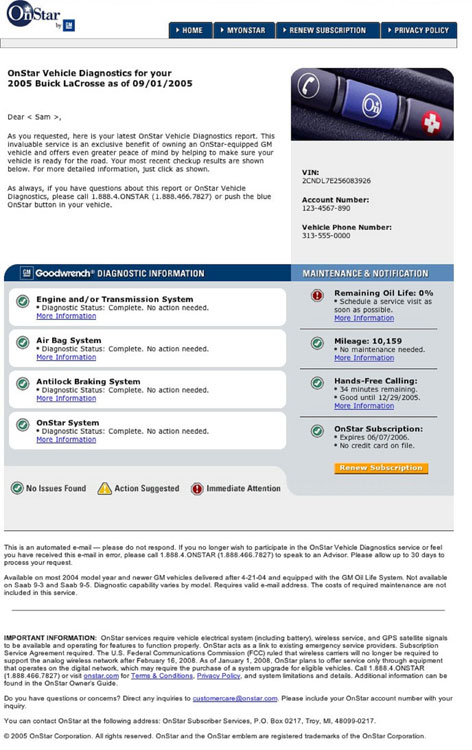
Of these ten services, there have only been two that I have used and appreciated: OnStar vehicle diagnostics and turn-by-turn navigation. I actually find turn-by-turn to be extremely good and – although some of my friends have found themselves misguided by the directions – it has never let me down. I also like the vehicle diagnostics report that is emailed to me once a month. The report is very clear and goes through the essential systems within my Camaro to ensure that all is copacetic. It’s a very nice feature that allows you to easily keep track of your car’s history. Other than those two services (and hands free calling), the rest of OnStar services are really for emergency use that maybe one in every 1000 subscribers will ever use.

The Question

And therein lies the question – is the service really of value to us? How often have you needed to contact emergency services while in your vehicle? For example, my Blackberry is connected through the superb Bluetooth connection in my 2010 Camaro and all I need to do is press a button on my radio to call 911. The cost to me? Not an extra penny (besides the cellular service I’m already paying for). To GM’s credit, they do realize that when people are in a severe accident, they may be so gravely injured or in such state of shock that they may be unable to call emergency services. For those OnStar subscribers who have been in that situation, they found the immediate voice of an OnStar agent irreplaceable and therefore swear by it. That experience is what made them true believers. If GM could have us all feel the same way as someone who experienced OnStar during a time of need, we’d all be OnStar subscribers.


Example of vehicle diagnostic report sent monthly to Onstar subscribers


So even though OnStar faces the challenge of marketing a service we clearly don’t need or want (based on the amount of new GM owners who choose to renew the service after the complementary one year), is there something else that OnStar can possibly provide to make us want to buy it? Let’s look at the following possibility.

What If?

We have a technology that facilitates communication between the outside world and the driver/passengers in the vehicle. OnStar’s service (over satellite and cellular) allows for rapid transmission of data and currently seems to be underutilized with respect to its overall transmission capacity. What can OnStar do that would make better use of the service’s infrastructure while benefiting the consumer at the same time?

What if OnStar offered internet access in your car? How about the ability to download and/or stream movies and mpegs (like our free General Motors podcasts) while sitting in your car? Suddenly, you no longer mind driving your spouse to the mall to do some shopping.

What if OnStar combined Bluetooth technology and allowed you to use your handheld device to connect to the Internet at a cheaper rate than what your phone company charges? For all you GM owners who have a navigation screen, how about the ability to use your nav screen to surf the net while killing time (waiting for your significant other at the mall)? We recently wrote about a dealer-installed service for some GM models that allows Wi-Fi connectivity in your car. Yet even this solution – although effective – may be priced out of reach for the average GM customer.

And for those of you envisioning idiot drivers attempting to surf the net and drive at the same time – there are ways for GM to prevent this from happening (such as to disable the navigation screen’s web-browsing ability if the vehicle isn’t in park). And here’s another thought – what if OnStar automatically sent you your email, Twitter or Facebook messages and displayed them on the radio information panel or HUD as soon as someone sent them to you? Better yet, what if it read them out loud to you?

Who Will Get There First?

As you most likely realize by now, GM hasn’t exploited the OnStar system to its full potential. But as sure as the sun sets in the west, one automotive manufacturer will not only bring in-car internet service to market first, they are also going to offer it with a very friendly user interface and at a very attractive price. What The General has going for it is that OnStar has a well-established infrastructure compared to those of other manufactures and can actually leapfrog competitors with a bit of forward-thinking. What’s more, the OnStar brand is well-known, even if people don’t know about every single feature the service offers.

Chris Preuss

Another feather in GM’s hat is Mark Reuss’ decision to have Chris Preuss take over the helm at OnStar. Chris was previously GM’s Vice President of Communications and he did a wonderful job introducing social media to the gargantuan organization. This accomplishment should not be taken lightly: recall the days where your phone call, letter, or email to GM would go unacknowledged. Indeed, GM has understood the value of social media and OnStar is just one more vehicle (pun intended) that gives GM the ability to profit from improved communication.

Posted via web from Hylton Jorssen's posterous

Friday, March 5, 2010

Cadillac: Remember When It Used To Be a Status Symbol?

We all know GM’s marketing strategy in the 1900’s – put Americans in a Chevrolet and – as they progressed towards the American dream – they consequently moved through GM brands until they owned a Cadillac. If you had a Cadillac in your driveway in the ’50s and ’60s, you were a somebody. Americans actually dreamed about, one day, owning a Cadillac. It was the ultimate status symbol. Neighbors envied you and other motorists enjoyed watching you drive by. Maybe that was then and one can argue that times have changed, but have they? Today, people still long to drive a status symbol to show their success, not only in America but around the world. The only difference is that Cadillac has been replaced by Mercedes-Benz as the status symbol of American success.
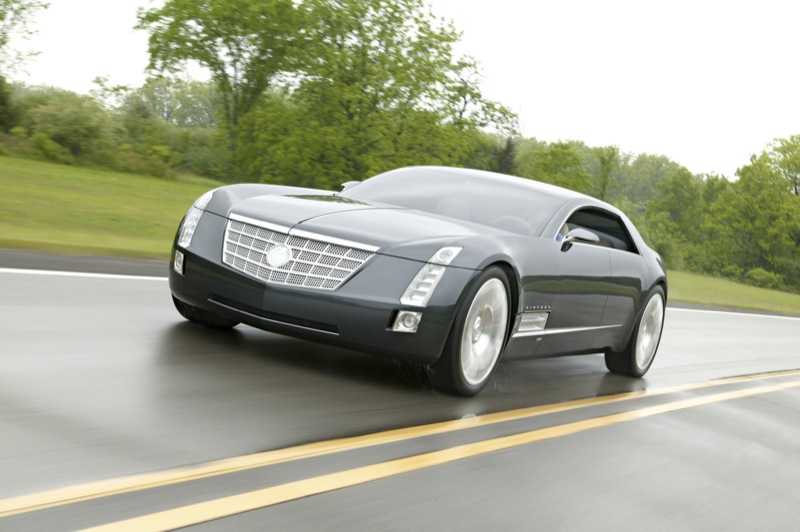
Some may say that “status” never mattered in America (or the world for that matter). But human desire to show status (affluence and position) within society has been with us since the caveman days. It is a desire that is as old as our ability to feel love, anger, or happiness. And, believe it or not, this desire is the very thing that should be driving Cadillac’s focus going forward. Cadillac needs to get back to being the ultimate vehicle the world wants to drive when they want to show they have “made it.” Find out how Caddy can do just that by clicking more! 

Turning Heads

So how does a car company become a “status symbol” for the masses? Management and design teams must commit to a vehicle that is absolutely stunning at first glance. The only Cadillac on a lot today that would take my eyes away from a silver Mercedes-Benz is a CTS-V. That’s because I know what the car represents from an engineering perspective and not because of exterior styling. Today’s Cadillacs all look like they were designed starting with a rectangular block that someone decided to cut a few angles into. It’s a design concept that started with the 2003 Cadillac CTS. Since then, every single Cadillac model has had an obtuse angle. Perhaps someone wanted this to become Cadillac’s answer to BMW’s trademark “kidney grill but – in the end – this design lacks influential style. Today’s Cadillac won’t turn heads in a store parking lot – and that’s the problem.

Affluent = Important

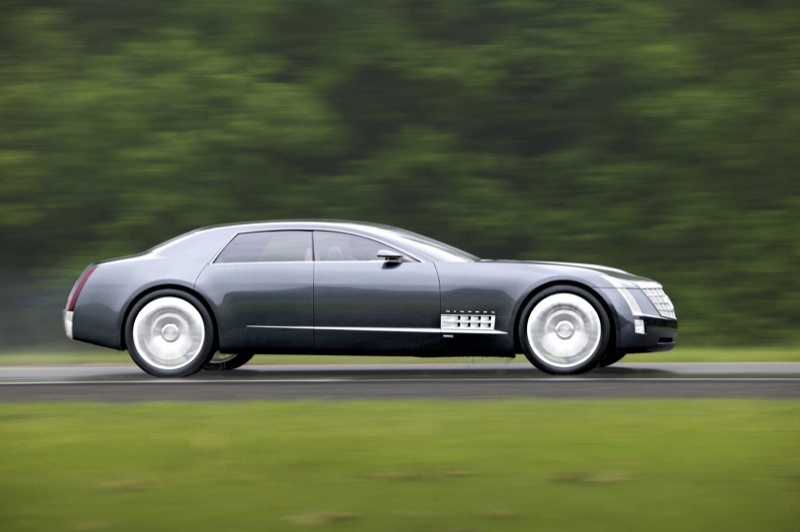
Has Cadillac recently designed a car that was able to turn the heads of everyone who saw it? Damn right they have - it’s the Cadillac Sixteen concept car, but someone at GM made the decision to mothball that for the XTS shown at this year’s NAIAS. The engineering and interior design of the XTS may be top notch, but the exterior looks nothing more than a warmed-over 2010 DTS. Contrast that with the Cadillac Sixteen, with its business coupe design (very long hood with short trunk overhang) – and it’s easy to see that the unique Sixteen could never be mistaken for any other vehicle. Its style commands  presence, something that is currently lacking at Cadillac. And to top it all off, the Sixteen certainly looks affluent.

Cadillac Sixteen Concept

The Converj

Most recently, Cadillac has mothballed the Converj concept car. The Converj had a sporty exterior along with the drivetrain of the upcoming Volt. Perhaps it would not have sold many units in this configuration, but was the design not worthy of consideration as a four-door BMW fighter? Had this four-door version been presented as an Alpha-based 3 series BMW fighter, we wonder how GM brass would have felt about giving it the green light.

Hakim Givens, GM Authority rendering specialist, graphs an extra set of doors onto the Converj concept car

The Status Car Crown

Regaining the “status car” crown means that GM must commit to designs using platforms that may cost more in the long run than using an architecture guaranteed to be the most profitable per unit (as Caddy did with the XTS and the Epsilon platform). “Good enough” is just not going to get Cadillac to where it needs to be in the market. Fit and finish at Cadillac must not only be noticeably better than other GM models, but it must be the absolute best in the world. Is GM willing to invest the money needed to ensure every panel is perfectly aligned and every panel gap is less than 2 millimeters? Are they willing to invest in higher quality material and quality control that ensures flawless finishes? There is just no public visibility to show me that GM believes Cadillac is more than just another brand. This is unfortunate. Cadillac must shine if GM wants to change market perception.

Market Perception

So what is the market perception of Cadillac right now? You tell me! In the first nine months of last year, Cadillac sold a dismal 32,586 vehicles. Compare that with BMW, which sold 160,666 units in North America in the same time period. There are many people are talking up the brand and its products but in the end, they’re not buying Cadillac. And I blame this on Cadillac’s lack of commitment to cutting edge styling. The desire to own a Caddy is simply not there, and until GM realizes that Cadillac has an image problem that only a large investment in design will solve, they can look forward to the brand slowly disappearing.

I discussed this very topic in much more detail on this week’s GM Authority Debate podcast – take a listen right here.


Posted via web from Hylton Jorssen's posterous