Tuesday, June 22, 2010

GM Dealerships: Let’s Stop Calling Them Customers Okay???


One thing that really burned my ass under Henderson’s reign was that he continuously referred to GM’s dealership network as “customers”.

Why did that upset me? Because if dealers feel that they are a customer and should be treated as such, it makes it impossible to put the end-consumer first. On top of that, it’s very difficult to implement new approaches to sales and service. In other words, where else would business (GM) try and tell a customer (a dealer) how to run their own affairs?

So if GM dealerships are not GM’s customers, what are they? Like the thousands of other companies with which GM builds relationships in order to produce and market the company’s vehicles, dealerships should be treated as suppliers: they are suppliers of marketing, suppliers of vehicle service and suppliers of sales service. In simple terms, GM dealerships provide a service to GM and multiple services – along with the ability to buy a product – to the consumer. If anything, the dealerships should be kissing GM’s butt (like some suppliers do) since it’s GM that allows them to earn a living.

It’s no secret that even after the failure and rebuilding of GM, it’s still business as usual at some dealerships. For example, it’s still common for dealers to employ sales reps who know less about the product than the customer walking through the door.

This one issue alone is reason enough for customers to dread the dealership experience. Consumers now see how much gobble-dee-gook a poorly educated sales rep is dishing them when they already know everything the salesman knows and then some. Problem is, the sales reps don’t realize what is occurring in this scenario and end up burying themselves and any deal.

Over the last 20 years, the buying habits of the American consumer has changed dramatically. How? We are now able to sit down in the comfort of our own homes and do our own research on our own time. We can make up our own minds about a vehicle to the point where the only reason for going to a dealership is to test drive something. But even the lack of a test drive will not stop people from ordering vehicles these days – GM had almost 12,000 Camaro orders before the first car was even built yet. That number would have been even higher had many consumers been able to by-pass the dealer.

Less known (even to GM brass) are the more unethical practices occurring in the trade surrounding the sale of their vehicles. For example, did you know that even though you custom ordered a vehicle to your specifications and put a deposit down, the dealer is under no obligation to sell it to you? In fact once the car arrives at the dealership, he is free to ask even more for the vehicle, citing “market conditions” as the reason for spiking the price. Keep in mind that this is despite the fact that you have a written contract (fine print is a bitch).

Last year, I was contacted by someone who had ordered a 2010 camaro back in September 2008. He had ordered it exactly as he wanted it and spent the entire winter dreaming about the shiny new Camaro that would be in his driveway shortly after they begun production in April 2009. Once his car arrived at the dealership, the salesman called him and told him to “come on over to sign the papers, the car is here!” How excited he was – he grabbed his particulars and headed down to the dealership. Once there, he was brought into the office and was told that the car would now be $3,000 more due to “market conditions”. It was $3,000 that he had not budgeted for and could not come up with. In the end, the deal went south and the car was put on the lot with a price above MSRP.

What was the result of this scenario? The dealer either got itself a short term spike in profit because someone most likely ended up paying more than MSRP; or the dealer got itself a lost sale that our would-be owner does not know about. For GM though, both scenarios resulted in one less customer for the next 10 years. If that customer turned around and bought a Mustang, their next car will most likely be a Ford as well and the individual will do nothing but curse the GM name to anyone who would listen. That’s the unfortunate part, the dealer is the face of GM and rarely does the customer comprehend the separation of the two.

So how can GM face the challenge of ensuring that good dealerships are properly recognized? First, they need to change their internal and dealer culture so that all clearly understand who works for whom. This simple change will allow GM employees who work on the sales side to come up with better strategies and programs that focus on the consumer as well as send a message to the dealerships that there are expectations to be met. Secondly, these new strategies must reward dealerships who perform well and penalize those who perform poorly. The “Turn-and-Earn” program is a good start but I don’t think it goes far enough on the penalization front. The CSI program has value except it is highly inaccurate due to only measuring those who purchased a car and not those who tried to purchase a car but left in dismay (huge gap). GM still has about 1,500 dealerships more than it really needs, so stripping someone’s franchise away should certainly be a possible outcome of poor performance.

GM must also better educate the consumer so that they understand poor service is not the normal practice with GM dealers and that certain practices (legal or not) are not something GM condones. Consumers understand that they have a choice in picking the manufacturer for their hard earned money but GM should also educate the consumer about the choice they have within the GM dealer network. Do you know which GM dealerships have the most awards and the reason the merit behind these awards? Me neither and it’s GM’s job to let you know before you decide to walk into a dealership. There’s only one customer and that’s you.

Posted via web from Hylton Jorssen's posterous

Wednesday, June 9, 2010

“OnStar, What Is Your Emergency?” I’ll Tell You What My Emergency Is…

You may have seen the OnStar commercial where the viewer is looking through the window of a cop car as it goes after a stolen blue Chevy Tahoe. The law successfully pulls over the Chevy after OnStar remotely starts blinking its lights. Strangely enough, of all the services that OnStar offers, the stolen vehicle recovery feature is what OnStar appears to promote the most. The commercial makes its point, but is it really going to motivate you to cough up a minimum of $200 per year for the service? Think about it… I thought that paying for vehicle theft recovery was covered through our cities’ policing budgets (that we pay for through taxes). And combined with my vehicle’s insurance policy, I think I’ve paid enough already. 

What Is OnStar?

As many of you know, I am the proud new owner of a 2010 Camaro SS which came with a one year trial of the OnStar service. This has allowed me to really get the warm and fuzzies for it. What is On Star? It’s a billable monthly service that gives drivers ten security features:

  • Automatic crash response
  • Emergency services
  • Crisis assist
  • Stolen vehicle assistance
  • Remote door unlock
  • Roadside assistance
  • Remote horn and lights
  • OnStar vehicle diagnostics
  • Hands free calling, and
  • Turn-by-turn navigation

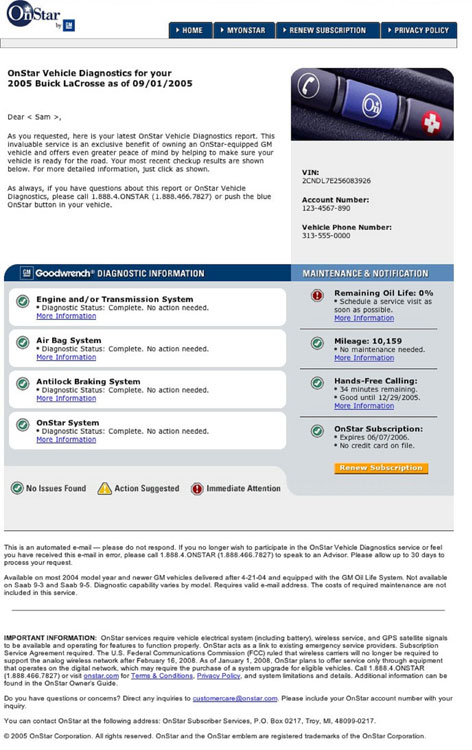
Of these ten services, there have only been two that I have used and appreciated: OnStar vehicle diagnostics and turn-by-turn navigation. I actually find turn-by-turn to be extremely good and – although some of my friends have found themselves misguided by the directions – it has never let me down. I also like the vehicle diagnostics report that is emailed to me once a month. The report is very clear and goes through the essential systems within my Camaro to ensure that all is copacetic. It’s a very nice feature that allows you to easily keep track of your car’s history. Other than those two services (and hands free calling), the rest of OnStar services are really for emergency use that maybe one in every 1000 subscribers will ever use.

The Question

And therein lies the question – is the service really of value to us? How often have you needed to contact emergency services while in your vehicle? For example, my Blackberry is connected through the superb Bluetooth connection in my 2010 Camaro and all I need to do is press a button on my radio to call 911. The cost to me? Not an extra penny (besides the cellular service I’m already paying for). To GM’s credit, they do realize that when people are in a severe accident, they may be so gravely injured or in such state of shock that they may be unable to call emergency services. For those OnStar subscribers who have been in that situation, they found the immediate voice of an OnStar agent irreplaceable and therefore swear by it. That experience is what made them true believers. If GM could have us all feel the same way as someone who experienced OnStar during a time of need, we’d all be OnStar subscribers.


Example of vehicle diagnostic report sent monthly to Onstar subscribers


So even though OnStar faces the challenge of marketing a service we clearly don’t need or want (based on the amount of new GM owners who choose to renew the service after the complementary one year), is there something else that OnStar can possibly provide to make us want to buy it? Let’s look at the following possibility.

What If?

We have a technology that facilitates communication between the outside world and the driver/passengers in the vehicle. OnStar’s service (over satellite and cellular) allows for rapid transmission of data and currently seems to be underutilized with respect to its overall transmission capacity. What can OnStar do that would make better use of the service’s infrastructure while benefiting the consumer at the same time?

What if OnStar offered internet access in your car? How about the ability to download and/or stream movies and mpegs (like our free General Motors podcasts) while sitting in your car? Suddenly, you no longer mind driving your spouse to the mall to do some shopping.

What if OnStar combined Bluetooth technology and allowed you to use your handheld device to connect to the Internet at a cheaper rate than what your phone company charges? For all you GM owners who have a navigation screen, how about the ability to use your nav screen to surf the net while killing time (waiting for your significant other at the mall)? We recently wrote about a dealer-installed service for some GM models that allows Wi-Fi connectivity in your car. Yet even this solution – although effective – may be priced out of reach for the average GM customer.

And for those of you envisioning idiot drivers attempting to surf the net and drive at the same time – there are ways for GM to prevent this from happening (such as to disable the navigation screen’s web-browsing ability if the vehicle isn’t in park). And here’s another thought – what if OnStar automatically sent you your email, Twitter or Facebook messages and displayed them on the radio information panel or HUD as soon as someone sent them to you? Better yet, what if it read them out loud to you?

Who Will Get There First?

As you most likely realize by now, GM hasn’t exploited the OnStar system to its full potential. But as sure as the sun sets in the west, one automotive manufacturer will not only bring in-car internet service to market first, they are also going to offer it with a very friendly user interface and at a very attractive price. What The General has going for it is that OnStar has a well-established infrastructure compared to those of other manufactures and can actually leapfrog competitors with a bit of forward-thinking. What’s more, the OnStar brand is well-known, even if people don’t know about every single feature the service offers.

Chris Preuss

Another feather in GM’s hat is Mark Reuss’ decision to have Chris Preuss take over the helm at OnStar. Chris was previously GM’s Vice President of Communications and he did a wonderful job introducing social media to the gargantuan organization. This accomplishment should not be taken lightly: recall the days where your phone call, letter, or email to GM would go unacknowledged. Indeed, GM has understood the value of social media and OnStar is just one more vehicle (pun intended) that gives GM the ability to profit from improved communication.

Posted via web from Hylton Jorssen's posterous

Friday, March 5, 2010

Cadillac: Remember When It Used To Be a Status Symbol?

We all know GM’s marketing strategy in the 1900’s – put Americans in a Chevrolet and – as they progressed towards the American dream – they consequently moved through GM brands until they owned a Cadillac. If you had a Cadillac in your driveway in the ’50s and ’60s, you were a somebody. Americans actually dreamed about, one day, owning a Cadillac. It was the ultimate status symbol. Neighbors envied you and other motorists enjoyed watching you drive by. Maybe that was then and one can argue that times have changed, but have they? Today, people still long to drive a status symbol to show their success, not only in America but around the world. The only difference is that Cadillac has been replaced by Mercedes-Benz as the status symbol of American success.
Some may say that “status” never mattered in America (or the world for that matter). But human desire to show status (affluence and position) within society has been with us since the caveman days. It is a desire that is as old as our ability to feel love, anger, or happiness. And, believe it or not, this desire is the very thing that should be driving Cadillac’s focus going forward. Cadillac needs to get back to being the ultimate vehicle the world wants to drive when they want to show they have “made it.” Find out how Caddy can do just that by clicking more! 

Turning Heads

So how does a car company become a “status symbol” for the masses? Management and design teams must commit to a vehicle that is absolutely stunning at first glance. The only Cadillac on a lot today that would take my eyes away from a silver Mercedes-Benz is a CTS-V. That’s because I know what the car represents from an engineering perspective and not because of exterior styling. Today’s Cadillacs all look like they were designed starting with a rectangular block that someone decided to cut a few angles into. It’s a design concept that started with the 2003 Cadillac CTS. Since then, every single Cadillac model has had an obtuse angle. Perhaps someone wanted this to become Cadillac’s answer to BMW’s trademark “kidney grill but – in the end – this design lacks influential style. Today’s Cadillac won’t turn heads in a store parking lot – and that’s the problem.

Affluent = Important

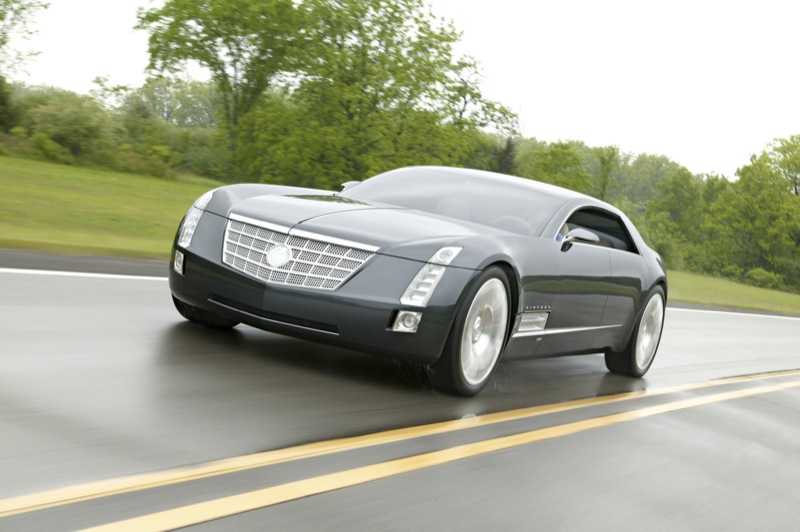
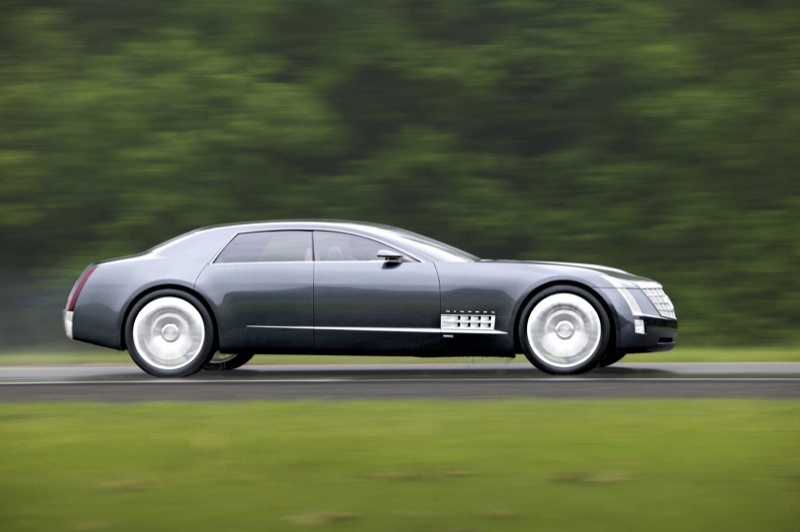
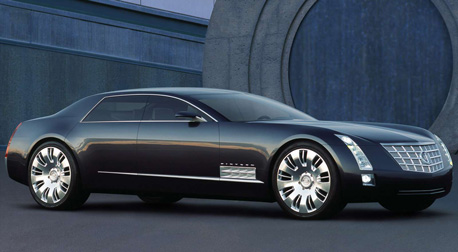
Has Cadillac recently designed a car that was able to turn the heads of everyone who saw it? Damn right they have - it’s the Cadillac Sixteen concept car, but someone at GM made the decision to mothball that for the XTS shown at this year’s NAIAS. The engineering and interior design of the XTS may be top notch, but the exterior looks nothing more than a warmed-over 2010 DTS. Contrast that with the Cadillac Sixteen, with its business coupe design (very long hood with short trunk overhang) – and it’s easy to see that the unique Sixteen could never be mistaken for any other vehicle. Its style commands  presence, something that is currently lacking at Cadillac. And to top it all off, the Sixteen certainly looks affluent.

Cadillac Sixteen Concept

The Converj

Most recently, Cadillac has mothballed the Converj concept car. The Converj had a sporty exterior along with the drivetrain of the upcoming Volt. Perhaps it would not have sold many units in this configuration, but was the design not worthy of consideration as a four-door BMW fighter? Had this four-door version been presented as an Alpha-based 3 series BMW fighter, we wonder how GM brass would have felt about giving it the green light.

Hakim Givens, GM Authority rendering specialist, graphs an extra set of doors onto the Converj concept car

The Status Car Crown

Regaining the “status car” crown means that GM must commit to designs using platforms that may cost more in the long run than using an architecture guaranteed to be the most profitable per unit (as Caddy did with the XTS and the Epsilon platform). “Good enough” is just not going to get Cadillac to where it needs to be in the market. Fit and finish at Cadillac must not only be noticeably better than other GM models, but it must be the absolute best in the world. Is GM willing to invest the money needed to ensure every panel is perfectly aligned and every panel gap is less than 2 millimeters? Are they willing to invest in higher quality material and quality control that ensures flawless finishes? There is just no public visibility to show me that GM believes Cadillac is more than just another brand. This is unfortunate. Cadillac must shine if GM wants to change market perception.

Market Perception

So what is the market perception of Cadillac right now? You tell me! In the first nine months of last year, Cadillac sold a dismal 32,586 vehicles. Compare that with BMW, which sold 160,666 units in North America in the same time period. There are many people are talking up the brand and its products but in the end, they’re not buying Cadillac. And I blame this on Cadillac’s lack of commitment to cutting edge styling. The desire to own a Caddy is simply not there, and until GM realizes that Cadillac has an image problem that only a large investment in design will solve, they can look forward to the brand slowly disappearing.

I discussed this very topic in much more detail on this week’s GM Authority Debate podcast – take a listen right here.


Posted via web from Hylton Jorssen's posterous

Tuesday, February 23, 2010

Buick – Geritol No Longer Included…

One of the divisions which needed a good start under the New GM is Buick. Thankfully, it is quietly becoming an exciting brand that is giving dealers the opportunity to sell well-built and stylish products. Gone are the re-badged Chevrolets and really bland looking cars that only grandpa could love. Over the past 15 years, Buick sales and market share in North America have been on a freefall (550,000 Buicks sold in 1991 versus less than 50,000 last year). GM had to do something and do it quickly in order to keep the brand going in North America.

Enter today’s Buick. Its models not only have heaps of style but are also world class, a term used to describe models that can be sold in all markets without major changes. Many of the products Buick is now/will be offering in North America (LaCrosse, Regal, and Excelle) are actually designs that were originally built for other markets. Buick’s new slogan is “The new class of world class,” and it will be interesting to see if the brand truly lives up to those words. I interpret this slogan to mean that not only will the brand offer at least one model in every market, but it will also show the “world class” heavyweights such as Volkswagen, BMW and Mercedes how to take the concept one step further.

In North America, Buick currently offers the Enclave – a large (Lambda-based) CUV, the Lacrosse – a luxury car that looks better than anything Cadillac has on the market, and the Lucerne – soon to be replaced by the smaller 2011 Regal (Thank God). Also scheduled to arrive on these shores in the next year or two is the Buick Excelle XT - a hatchback currently sold in China (known in Europe as the Opel Astra). Buick’s progress in China has been well documented – selling over 540,000 units last year in the People’s Republic alone. And how is Buick doing in Europe? Well in Europe, North America’s upcoming Buick Regal was introduced last year as the Opel Insignia. It won European Car of the Year honors and sold an amazing 170,00 units in its first year. No other car has had a higher share of the mid-size market over the past 10 years.

Obviously, this is success that should be nourished. But what is also obvious is the detachment between markets and products. If Buick’s slogan is “The new class of world class,” why are some Buicks sold as Opels in Europe? I realize that Opel (Vauxhall as well as Holden – for that matter) is a hodgepodge of GM vehicles sold here as Saturns, Chevys and Buicks – but perhaps in the midst of all the past and present Opel turmoil, it’s time GM consider rolling Opel into the Buick division.

That’s not to say that The General must immediately drop the Opel brand, but rather, amalgamate Buick and Opel’s products so that they become more homogeneous. Without a doubt, old GM would have stated that such a proposition was impossible. But take a close look at how high-tech companies have managed mergers and acquisitions: for decades, they have successfully swallowed up companies without disenfranchising the customer base. The economies of scale of such a decision would be enormous, since all products would have to be considered as a global product rather than for one particular geographic market.

Buick is proving that it can offer the same product globally – an encouraging sign indeed. It is trying to position itself as a direct competitor to Lexus and Acura while – at the same time – offering distinct vehicles that are nothing like Chevrolets or Cadillacs. With the Lacrosse, Regal, Excelle and Verano, Buick should be able to do just that – provided it can continue to combine quality, performance, luxury and style in all models. Will it truly become the new class of world class? That’s a bold statement in my book. But if the brand structures itself to become a global brand, it will be another sign that GM is on the proper path to success once again.

PS: Checkout www.gmauthority.com for Alex Luft's soon to be published in-depth research paper about his proposed strategy GM should take with Buick and Cadillac as discussed on the GM Authority Debate show. Stay tuned!

Posted via web from Hylton Jorssen's posterous

Tuesday, February 16, 2010

GM Volt: Hey Buddy, The Line Starts Back There!!! Well Not Really…

2011 Chevrolet Volt Production Show Car

Yesterday, GMauthority.com reported on a recent interview by Chevrolet Brand Director Jim Campbell in which he discussed how Chevrolet will manage the supply-demand pressures of the new Volt when it comes to market. Part of the solution is to roll out the Volt in three initial markets: California, Michigan and Washington, DC (which sounds like a political move more than a marketing one to me). In any event, a staggered introduction to market may indeed help manage the initial demand for the Volt, but what would you say if I told you that the first customers to plunk down a deposit in those initial launch states will not necessarily be the first to drive the car home?

As absurd as this may sound, this is exactly what will happen. You see, behind the roll-out of any model lies a process used by GM called Dealer Allocation. Dealer Allocation is quite simply the number of units of a particular model a dealer will be able to acquire (and thus sell) in a given period of time. This number is usually formulated based on a combination of things. With respect to the Volt, I believe the allocation criteria will be formulated on the three following attributes: overall dealer performance, dealer sales of GM hybrid vehicles, and Toyota Prius sales in the area.

Dealer Allocation

Does this mean every dealer will get the same amount? Absolutely not – the bigger dealers who move the most product and who best meet the model’s allocation criteria (as I have outlined above) will be the ones that get more units. This means that your favorite Chevrolet dealer may earn 20 Volt allocations and the Chevrolet dealer down the street may earn only 2 in the same time period. Not only may the discrepancy be that large between neighboring dealerships, but that allocation number is not public information. This has an immense effect on pre-orders – those who have put down a deposit on a signed contract even before the cars start arriving to the dealership.

Preorders

The allocation number will tell all Chevrolet dealers exactly how many Volts GM will build for them over the first few months. Unfortunately, this does not constrain the dealership from pre-selling more of the hotly-anticipated PHEV than the earned allocation, as GM does not manage this process in any way. In other words, a dealer (knowing they only have two Volts arriving within the next six months) can pre-sell 20 Volts and simply tell the customer that the order has been put in. For the 18 customers who are at the bottom of the list, they are at the mercy of whatever story the dealer tells them regarding the production of the car. Dealers are under no obligation to disclose how many of their earned allocations are spoken for when making pre-order sales. As such, many dealers don’t disclose this information to the customer because if they did, you would probably walk right out the door.

And until the dealer is contacted by GM with their next Volt allocation number over the next time period, the dealership will have no idea when the pre-ordered Volt will arrive, leaving the buyer to the mercy of listening to dealer gaffle-bab everytime they call to inquire about the pre-ordered Volt. In all likelyhood, many Volt pre-order customers will have to wait months or even a full year before their car will finally be delivered to them. This is currently the case with some 2010 Chevrolet Equinox pre-orders.

To rub salt on the wounds of GM customers who have the most faith (most pre-order customers haven’t even seen the vehicle let alone drive it), dealers have the right to decide if they want to participate in the pre-order process. The implication of this is that the dealer who has earned 20 Volt allocations can actually opt to have all 20 Volts delivered and sitting on the lot for sale despite the fact that the Chevy store down the street has 6 orders pre-sold but has yet to earn the allocation to fill it.

Chevrolet General Sales Manager

I brought up the issue with Kurt McNeil, Chevrolet’s General Sales Manager and asked him to re-visit this approach. I suggested building pre-orders before unsold units but within allocation constraints. This would – at the very least – encourage dealers to sell units before they arrived – something that has huge implications for GM’s bottom line (as I wrote in my article here). Kurt indicated to me that this process would be difficult to change due to current State and Federal franchise laws. I’ll dicusss Franchise Laws in a future article but for now, let me just state that most franchise laws are created to ensure (amongst other things) that a car manufacturer must treat all of its dealerships in a “fair and equitable manner.”

So if GM cannot better serve pre-order customers due to franchise laws, how come GM can legally roll-out the Volt in only three states? How is that “fair and equitable” to the remaining 47 states? Beats the hell out of me, but if that passes the “sniff test,” GM management should be able to get Legal off their asses and figure out a way to treat its most loyal and trusting customers properly and without breaking any laws.

GM Legal

For too long, GM’s legal department has been able to dictate to GM management that certain programs were impossible because of “this and that” and that was an accepted practice. It was taken “as is.” If I were Ed Whitacre, I’d just tell them to shut up and make it work. The quality of work coming out of GM’s legal department has a measurable effect on how the customer, you, and I are treated, and they have as much a mandate to stop doing things “the old way” as everyone else at GM.

So if you end up waiting six months for the Chevrolet Volt on which you put money down six months earlier yet your neighbor was able to have a shiny new Volt in his driveway immediately by simply dropping by a dealership, now you know why.

Posted via web from Hylton Jorssen's posterous

Thursday, February 11, 2010

GM Management: What’s With That Heap You’re Not Driving?

In the past, GM management got to drive the shiny new car models home as it was seen as a perk or job benefit. But in the car business, is that really wise? Looking at this old practice a bit closer brings a question to mind – how is a company supposed to understand what it is up against if management is always driving the newest cars in their fleet?

I am happy to hear that management has changed its ways to some degree, as it is driving the competition at least once a week. Fridays are usually “drive day” at GM and many spend that afternoon driving a competitor’s vehicle. This is important because you obviously need to know your competition if you want to compete. But is GM management driving old high mileage cars from the competition? No. Are they driving high mileage GM cars? Again – no – but why should they?

It’s the small stuff I wonder about - rattles, creaks and long term wear. Not only will they not show up when management is driving a new car but they will also not show up in a J.D. Power and Associates Quality survey – something that measures vehicle quality after only 90 days of ownership. 90 days! Heck – even a brand new Trabant should score high marks after 90 days. The only way true quality can really be measured is to evaluate a vehicle after years, not months, of ownership.

I recently received communications from Leanne Wandoff, with GM Communications, supporting Quality. She stated to me that “initial quality is an early indicator of long term reliability, as they strongly correlate.” I found that comment to be bizarre since it is impossible to determine how long a car part (or any part) will last based on using it for just 90 days. If anything, it’s the exact opposite – long term testing results will strongly correlate to short term reliability. I asked her to consider a regular process where all management drive a five year-old GM vehicle with high mileage at least once a month for a few days. Why? Because it will tell those in power a tale which they have yet to experience, and therefore completely understand. It’s a tale which most of my readers live everyday – the daily driver.

Many of us live with less than perfect vehicles. You know what I’m talking about – worn seat foam and/or material, slow power window motors/regulators that need replacing, dash gauges that don’t work accurately, electrical shorts from wires chaffing, as well as the usual rattles and noises. Are these to be expected in a vehicle that has 200,000 miles of steady use? My answer is a resounding NO!

For example, in college my buddy had a 1979 Toyota Corolla. It was rusty and almost as ugly as an Aztec but the thing just wouldn’t die. We beat the crap out of it and it was rattle free and never failed. The interior (though boring) never wore out. My brother still owns a 1983 BMW 320i that is rattle free, solid and reliable. Even my father has a 12 year-old Volvo that drives like it is only a year old. There’s an old wise tail that Volvo will buy your car back after you’ve reached a million miles. Well that’s far from the truth, but it does have a recognition program that congratulates owners who have put high miles on their cars. This type of program can only exist if quality is engineered into the car for long term usage from the get-go.

Truth is, a well-used GM vehicle feels older than it actually is. Perhaps this was designed to encourage loyal GM customers to trade in their vehicles, but for every customer that did that, two went elsewhere. That is exactly what GM has to stop doing, and addressing long-term reliability and quality is just one aspect that will get GM back to the top.

Posted via web from Hylton Jorssen's posterous

Monday, February 8, 2010

Toyota – Should They Be Popping The Champagne Corks At GM?

You may be a late night-er and have caught one of the talk show hosts doing a bit about Toyota’s latest nightmare. For decades, Toyota has had a market perception which GM could only dream of. People bought a Toyota because they were safe, reliable and had a high resale value. Maybe that was true but obviously, that reputation has taken a major blow to the nether region.

What does this all mean for GM? Well as far as GM’s current business strategy, hopefully nothing at all. You see, the old GM would have been jumping for joy at this latest set of unfortunate events. Some old GM folks may have felt that they could “loosen the belt” a notch or two, sit back and watch the customers come calling. In today’s market however, this attitude will never put GM back at the top.

Instead, GM must look at Toyota’s setback not as a victory, but rather as an event which brought the one opponent within sight. Companies such as Ford and Hyundai (watch out) will continue to rapidly improve their products and service to the point where they will surpass Toyota. Don’t think so? Take a walk into your local Hyundai dealership and check out the panel gaps – they are shockingly narrow. Now compare them against anything Toyota or Lexus has and you’ll see what I mean.

The battle for product and service improvement must be continuous and irrespective of what setbacks a competitor may have. In that regard, GM still has a lot of work ahead and hopefully, the folks at the New GM will run this race more determined than ever and they better - the Koreans are bringing up the rear and gaining ground fast.

Posted via web from Hylton Jorssen's posterous

Tuesday, January 26, 2010

Sam McLaughlin - One of GM's pioneers who's legacy stands as our last remaining piece of the "old GM".

June 1st, 2009- the day General Motors officially declared bankruptcy. I knew it had to be done and I believed it was the best thing going forward but it was a very sad day for me. I realized that one of the greatest stories of free enterprise and the entreprenuerial spirit had come to an end. This company (along with Ford and many others who have come and gone) had done much to shape our current way of life.

The men who built these companies from nothing more than a dream, set the example of how to make a company, country and it's people prosper. They had an idea and ran with it without so much as a care what others thought of their ideas. Many experienced failure initially but their determination to succeed is what ultimately gave us the lifestyle we all enjoy today.

One of these great auto barons was Robert Samuel McLaughlin was born in Enniskillen, Ontario, September 8, 1871. His father, Robert McLaughlin Sr., was a pioneer in the manufacture of vehicles in Canada. From a modest enterprise of carving ax handles, the senior McLauglin McLaughlin familybegan to build cutters and wagons in 1867, first in Tyrone, Ontario and later in the larger community of Enniskillen located a few miles further east. Demand quickly increased, and in 1876 the enterprise was moved to the expanding community of Oshawa, Ontario.

Initially, Sam McLaughlin was reluctant to enter the family business, and considered mercantile or legal careers. After completing high school at age sixteen, Sam apprenticed in his father’s carriage works and became a journeyman three years later. At that time he left Oshawa to gain broader experience in the manufacture of vehicles, working in Watertown, Syracuse and Binghamton, New York.

Following his return home - and to mark his 21st birthday - Sam and older brother George were made partners in McLaughlin Carriage Works, which grew to become the largest carriage company in the British Empire. Sam was named the chief designer for all McLaughlin carriages and sleighs. By this time, the family firm had achieved sales of over one million dollars per year, and had developed and patented the “fifth wheel” - a revolutionary turning mechanism which allowed the front wheels to turn independently from the chassis.
With the advent of the motorcar, Sam turned his interest to developing a McLaughlin line and began to tour U.S. production facilities. He and his brother George persuaded their father that the future of the firm lay in motorcar production. Robert Sr. was reluctant but finally agreed to proceed with development. In early 1908, even before the creation of General Motors, the McLaughlin Motor Car Company was established, with Sam as President.

The company failed in its attempt to produce a completely original motorcar, due to the illness of the chief engineer. The next production attempt was a winner: the McLaughlin-Buick began production in 1908. It was designed and built in Canada using an engine supplied by the American firm of Buick. The arrangement was brokered through an agreement with Sam’s friend William Durant, one of the original “architects” of General Motors. In 1915, production of Chevrolets began through a similar arrangement. The promise of a thriving “horseless” industry overtook the fading carriage works and the McLaughlin Carriage Company was sold that year.

With intense competition from many newcomers, it was “survival of the fittest” within the new auto industry. Even the legendary McLaughlin quality was not enough to guarantee long-term success. With the lucrative agreement with Buick drawing to a close, and with no immediate third generation to carry on the family firm, the McLaughlins decided to join forces with the new General Motors Corporation. This move would ensure the long-term success of the company and would increase chances that production would remain in Oshawa.

The McLaughlin Motor Car Company was sold in 1918 to General Motors to facilitate the formation of the Canadian operation of General Motors of Canada. Sam was named President of the Canadian operation and Vice President of the parent corporation and his brother George was named Canadian Vice President. Sam remained President until 1945 when he stepped down and was named Chairman of the Board, a position that he held until his death in 1972. "Chrysler, Olds, Chevrolet - the men, not the cars - were his buddies," wrote author Heather Robertson, "for McLaughlin presided at the birth of the North American auto industry."

Today GM Canada is headquartered in Oshawa, Ontario at 1908 Colonel Sam Drive. It's Oshawa factory is not only GM's most advanced, it's also one of GM's oldest and largest. To this day, it still produces exceptionally high quality vehicles, a trait which Sam McLaughlin was known for. Since GM Canada did not declare bankruptcy at any time, it now remains the sole corporation with legal ties to William Durant and the rest of GM's forefathers. That's a history, we should all protect.

Please click on the following for more history of GM Canada's beginnings: http://www.gm.ca/inm/gmcanada/english/about/OverviewHist/hist_gm_canada.html 

With excerpts from the Parkwood Foundation.

Posted via web from Hylton Jorssen's posterous

Wednesday, January 20, 2010

Cadillac XTS - Bottom of the 9th, bases are loaded. Here's the 3-2 pitch and.....

First thing I look at with a new car design are the angles and curves. I ignore interior, drivetrain and wheels. I envision it approaching, leaving,  driving by or simply parked. I then think about how it's exterior style stacks up against the competition and in the case of the XTS, that means stacking it up against the Germans. Can I drive it up to a successful CEO's home with it and look like I fit in? Or will I end up looking like a wannabe? Status afterall, can be important and as far a luxury cars are concerned, you are what you drive.

When I first saw the initial rendering of the XTS concept car, I was excited. It had a unique sleekness at every angle. It's rear end had paid tribute to the 1967 Cadillac Eldorado and it's long hood, short trunk overhang screamed business coupe. Wow I thought, this thing is going to make the Mercedes CLS look like a golf cart. But what happened to cause the concept car to come out looking like a bigger CTS at this year's NAIAS?

Before I start getting emails from some of my GM friends, please don't interpret my comment as implying that the Cadillac CTS is a bad car - it's not. It's just that the top of the line sedan in any luxury car company must NEVER borrow from it's lower models - NEVER. In actual fact, it should be the lower models trying to imitate the upper models. As soon as the lower models look similar, you re-design the upper model and the process starts over again. Take a look at what BMW and Mercedes - they've been doing this for years. 

Now I do like the side profile of the XTS at NAIAS - it's sexy, sleek and sophisticated. The interior is absolutely stunning. But why change the front and rear fascias so dramatically and more importantly to make the car resemble a lower priced Cadillac? I get the whole obtuse angle thing that Cadillac has been trying to throw into every model but honesty, it's starting to get long in the tooth. If I am going to pay a 10-20K premium for this car over the lower priced Cadillac, the last thing I want is for one of my golf buddies to yell "Hey Big H, did you just buy that? Nice CTS". Call me shallow but that would make me absolutely cringe. 

I love what is going on at Chevrolet and Buick right now as I see nothing but sales on the horizon. The GMC Granite was a nice surprise and holds plenty of promise. Cadillac? Well, we are just going to have to stick around and find out if the upcoming XTS is the clutch hitter a bat.


XTS Concept car.


crop this image

crop this image

crop this image

Cadillac XTS at 2010 NAIAS


Cadillac's 2010 CTS

Posted via web from Hylton Jorssen's posterous

Tuesday, January 19, 2010

The new GM - Taking the buying experience to a whole new level...

Many of GM's upper management have stated that one of the reasons for the old GM's failure was that they dropped the communication ball. They didn't listen to customers, dealers or employees for that matter because they thought knew what we all wanted. That practice taught them a valuable lesson and now, the new GM has done a complete 180 by initiating programs which ensure that the customer/dealer/GM relationship is nurtured and developed into a long term one.

One tiny example is an initiative developed by Mike Judge, a CAW Local 222 member and employee at GM's Oshawa, Ontario plant. He has come up with a unique way to thank GM customers who have purchased new camaros (which are built at his plant). "GM had been going through a nightmare last year and I just wanted to do something to show how much we appreciate the fact that many of them still had faith in us" says Mike "We realized that some of these folks were putting deposits down on our car's when they were not even sure if we would still be around. That's something we on the plant floor won't forget".

With the co-operation of his co-workers, Mike had a custom lithographs (designed by Dave Kimball) signed by those who have worked on a specific customers car. These customers then have a very unique piece of memorabilia which does nothing but strengthen the bond that the customer has to GM, it's emplyees and the car purchased. Due to the fact that this activity goes above and beyond Mike's daily responsibilities and that it is funded by only himself and his co-workers, it is just not feasable for him to provide this to all camaro purchasers. "We do have a criteria which determines who gets selected for one of these lithos but we do not publish it so that we can be as fair as possible".

One of the lucky few to receive a signed litho was Lisa Graves, of Baton Rouge, Louisianna. Lisa had ordered an Aqua Blue Chevrolet camaro SS which was built at Oshawa this past summer. "This car has absolutely changed my life and I had never imagined or anticipated the joy it would bring me. So when I received an email one evening informing me that I had been selected to receive one of the signed lithographs, I was just floored. It's something I will treasure always" says Lisa.

lisa_s_litho

Signed lithograph for Lisa Graves of Baton Rouge, Louisianna

Reaching out like this takes the customer relationship to a whole new level. Mike Judge's initiative alone has now created life long GM customers due to the increased bond his work creates between the customer, the vehicle and the GM employee. Hopefully, it's something which GM can implement North America and product wide. Thank you Mike Judge for thinking outside the box!

Mike Judge (left) with 4 GM customers who were selected to receive a signed Dave Kimball print of the new 2010 camaro

Posted via web from Hylton Jorssen's posterous

Saturday, January 16, 2010

Camarotracking.com - A new concept on how to communicate with the domestic auto industry's customers.


One of GM's current problems is how to keep new customers happy during the ordering and buying experience. I was able to experience this personally after ordering a new 2010 Camaro. The issue specifically was that as a customer, I was not given proper or accurate information in regards to when my vehicle was getting built and/or delivered. I would call my dealership or GM's Customer Service number only to get ambiguous or poorly detailed information.

There were so many Camaro buyers dismayed by the buying experience (due to back orders) that myself and a few other GM customers decided to create a website which allows GM customers to find as much information as possible regarding their current status on their ordered car. We created a website called www.camarotracking.com which is designed to let customers of the new Camaro track the status of their order and their car as it moves thru the production process.

The process is simple - the customer enters their production order number (a 6 character alphanumeric value given to every GM customer when ordering a car) and email address on the website:

As the car moves through the production process, they are automatically sent emails identifying the status change to their order. They can also view their current status online just entering their order number or email address in the track now box and clicking the track now button.

This example is typical and is an Equinox actually entered into our system.  As you can see the status is at 3000 and has a TPW of 1-11-2010. Once the car is built and a VIN issued it begins to be tracked by the VTIM data automatically with no new entry required by the customer or dealer.

 The customer can even view their online window sticker simply by clicking on their VIN number.  You might notice that a railcar number is provided along with the vehicles current status. This example is In-Transit from Oshawa and it began its journey on December 9th. The customer will receive their email update at each status change.The process for post production includes these stages for easy understanding.  On Hold if a Quality Control hold is placed,  Available to ship from location, In-Transit from location, Available to ship from rail yard, In-Transit from rail yard and of course Delivered to dealer.

The email process also has the ability for on-line marketing where GM can advertise GMPP products related to the product the customer has ordered. Metrics can also be added to the application which would allow GM to monitor regional sales activity, usage by customer, usage by dealership and end-to-end transaction time.

This easy to use system has helped over 10,000 Camaro customers and has increased the customer buying experience.  It has in fact been so well received and easy to use, that many Chevy Dealers across the county are using the system themselves. This includes the number one Chevy Dealer in the nation, Classic Chevrolet and other major dealers like Hendricks Chevrolet.  The benefit of being able to easily and automatically update themselves and their customers via the status update email, has allowed them to focus on selling cars, rather than trying to track down the status of an existing order via Global Connect or DBC which quite often, is not available to the floor salesman. Salespersons simply receive daily updates by the website which they can re-communicate to their customers. This not only saves time for the sales personnel, but it also makes it easier for them to keep the customer informed.

Camarotracking.com has also created a public forum on the site where people can anonymously ask questions, get special tracking information, updates or just spend time with people in the same situation as themselves. It gives them a sense of community and helps create a long term GM customer due to the customer becoming emotionally attached to the product even before they receive it. This unique process has never been executed in the past by GM. The excitement that customers express when they learn their "baby" has been built is proof alone that this type of service is needed at GM

The service is free and although initially focused on the Camaro, numerous other GM customers who ordered products such as the Equinox or Lacrosse are making tracking requests.  At this time, Camarotracking.com is only able to provide limited service to these customers up to the point that the VIN is issued. The full service is available to any GM Product Manager or Director who wishes to add this level of customer satisfaction to their portfolio. In fact, this service can easily adapt to any car manufacturers ordering process.

This entire process was created to mitigate the lack of communication regarding ordered vehicles while at the same time, create customer loyalty and customer satisfaction. It was made possible by the efforts of GM employees who are exactly what Ed Whitacre has been looking for. There are indeed dynamic and visual people hard at work at the new GM. Let's hope those folks get the credit they deserve and GM will see this service as revolutionary enough to implement corporate wide.

Posted via web from Hylton Jorssen's posterous

Yes, the direct Ebay selling was a disaster but the new GM's attempt to sell through the internet must continue...

Recently, many of you may have read about a trial program where General Motors attempted to sell their vehicles through Ebay. The reason for this was simple, GM had done enough research to know that a huge consumer base want the ability to buy a car directly from the internet to avoid the huge disappointment of dealing with a salesperson who knows less about the product than they do - (see side story "women turned off by dealers" http://www.autoremarketing.com/ar/news/story.html?id=10596). The Ebay trial turned out to be a dismal failure and nothing more than what many of it's dealers were already doing. Perhaps the idea to reach out directly to it's customers was correct but the manner in which they executed it was poor.

The hurdle GM (or any other car manufacturer) faces is that it cannot sell directly to the consumer because they are not legally allowed to due to federal and state franchise laws. State Franchise laws vary from state to state but generally are there to ensure that car manufacturers treat all dealerships in a vaguely defined term - "fair and equitable manner". Any activity to sell directly to the consumer without any dealer involvement would be seen as undermining the existing business relationship and dealer associations would have the car manufacturer dragged into court faster than a lotto winner signing his name on the winning ticket.

One possible solution is to create and online sales program which will gives dealerships the option of participating in. The program would work in a manner that allows the consumer to select the model/options they want followed with a small deposit (as is usually the case when dealing directly with a dealership). As for pricing, GM should be able to offer some price discount AND pay participating dealerships their full commission provided the vehicle can be in the consumers driveway within 30 days of the initial order (see my blog called "Pay your suppliers with post consumer money and watch profits soar).

As orders come in to GM through the Internet, they would be distributed to participating local dealerships in a similar manner as GM distributes it's allocations, thus ensuring a process that would abide by state franchise laws. As soon as the customer completes the transaction, the customer would receive a confirmation notice through a vehicle such as camarotracking.com which would return the order number and order status code. The dealer would receive notice through Global Connect telling with the customer and sold units particulars. Both the dealer and the customer would then be kept informed regularly through tracking software.

All Internet sales directed to a dealership would count against it's allocation for a particular product so that no dealership would be treated unfairly. Dealerships who do participate must turn the product over to the consumer within 24 hrs of the vehicle arriving to ensure a quick completion of the transaction. This would also limit the consumers exposure to only dealership activities that involve closing the deal, which is something that many consumers would appreciate.

It's a win-win for everyone involved. The dealer makes it's comission on it's allocation, the customer get's to order in a manner of preference, both the customer and dealership get regularily notified of the orders progress through camarotracking.com, and the dealer get's to focus more time on marketing and walk up activity. So is it possible for GM (or any other car manufacturer) to sell directly to the consumer? As long as the solution includes the participation of the dealership community so they can profit by the transaction, then absolutely!

Posted via web from Hylton Jorssen's posterous

Friday, January 15, 2010

Chevrolet at NAIAS - Where was the spark?

Perhaps you took in this week's NAIAS (North American Internation Auto Show) and were expecting something from Chevrolet which would blow your sox off. Maybe you wanted to see an 800hp version of the concept Corvette or perhaps a production model of the soon to be available SS camaro convertible.

Instead, we were given a presentation by Chevrolet General Manager Jim Campbell, which clearly demonstrated the future direction of Chevrolet's focus which is value, style and fuel saving. In case you missed it, here's the presentation: http://generalmotors.posterous.com/watch-the-chevrolet-press-conference-from-nai.

Well after watching this presentation, I have to say a resounding BRAVO!!! to Chevrolet. Presenting vehicles such as the Volt, Aveo RS, Spark and Cruise, really made a statement to the public that Chevrolet will once again, start building "bread and butter" cars - vehicles which the vast majority of North Americans will purchase. Bread and butter vehicles do not need to be flashy, they just need to be what the public wants at a given moment in time. Given the current and short term future of the global economy, combined with the long term escalation forcasts in the price of oil, it leaves little doubt that car companies should be focusing on affordability and fuel consumption.

When General Motors had it's 6 divisions in the '60's (Chevrolet, Pontiac, Oldsmobile, Buick, Cadillac and GMC), it's intention was to have a car for everyone and that as you progressed in life and became more successful, you would naturally trade in your Chevy for a Pontiac, then trade in your Pontiac for a Buick and so on until one day, you would have that shiney new Cadillac in the driveway which told all your neighbors "you made it". This was a good strategy and worked during the industrial age but as time went on, GM divisions decided to share platforms and options to save development.

This practice was so prevalent among divisions, that a unique term is now used to describe it - "Badge Engineering". The concept assumed that you could offer the same vehicle with a different name, change the grill, wheels and car color, wrap it around a unique marketing program and the consumer would believe it was a totally unique product. It did indeed save development costs but the consumer wasn't buying it (pardon the pun). Instead, they would look at one GM product and compare it to what Ford, Toyota or Honda was offering. GM had overestimated their dominance in the industry and underestimated the publics intelligence.

Obviously, the New GM has realized this past mistake and has gone back to what made the company strong in the 50's. Create core brands which are clearly unique from one another and give the consumer the ability to move from one brand to another, with a feeling that they have either moved up in vehicle class, or moved into another genre. Yes, old is new and Chevrolet is once again becoming the common man's vehicle - the vehicle which first car buyers, low income or retirees on a fixed income will consider.

So where was the Spark at this years NAIAS? It was right where it should have been - on stage at the Chevy presentation.....Chevrolet is obviously headed in the right direction.

Chevrolet Spark:

Chevrolet Aveo RS:

Chevrolet Cruise:

Chevrolet Volt:

Posted via web from Hylton Jorssen's posterous

Wednesday, January 13, 2010

GM should pay suppliers with post consumer money and watch the profits soar...

What does it take to make a domestic car company profitable? Many things really - some things are obvious to us but other things, which can make a dramatic difference to the companies bottom line, are things which get burried into company process and policy. One of those things, which the average consumer (and apparently GM manager) never looks at, is cash flow.

Cash flow, quite simply, is the amount of money an entity brings in vs. the amount of money an entity spends in a given period of time. If you spend more money in a month then you earn, you have negative cashflow. If you bring in more money than you spend, you have positive cash flow. This financial force is upon every business and person existing in a capitalist society (you and me) but it's impact is greatest felt by businesses that require large amounts of capital in order to offer a product or service. Automakers certainly fall into that high category since they require to spend billions of dollars (build a factory, product R&D) just to bring 1 single vehicle to market.

Right from the start, a car company is in the red for every model it brings to market. It hopes that over a few years, it can develop enough positve cash flow through sales of a particular model, to cover all of the initial and on-going cash demands and hopefully have a few bucks left over that would be registered as profit. That profit can actually increase per unit by simply changing when you pay your supplier and (in GM's case) when you get paid for your product.

To help you better understand this theory, let's take a look at the new camaro. I speak regularly to GM employees who work at the Oshawa plant as well as GM employees involved with the development of the product so my take on this is from that perspective. It takes no more than 5 days (on average) to build a camaro from start to finish. Very little of a camaro's parts are manufactured by GM anymore. In fact, the only thing that GM manufactures is the sheetmetal and the engine - that's it. Everything else is built by companies such as Magna, Martinrea, and American Axle, then transported to the plant for assembly. My point is not that a car plant has little to do since that's so far from the truth (watch "Ultimate Factories - Camaro" the next time it's on the SPEED channel) but rather that most of the parts and pre-assembled pieces from suppliers are on Net 30 payment terms.

What does this mean? Simply that GM has 30 days to pay the supplier from the date of invoice before incurring any additional costs such as interest, penalties or God forbid, part supply disruption. Most often, GM is invoiced every month by it's suppliers which means that a part supplied on December 1st, does not have to be paid for until January 31st. But for the sake of simplicity, let's just assume that GM get's invoiced with Net 30 terms the moment it receives a part for a car. As I indicated earlier, it takes 1 week to build a car and 3 weeks at the very max, to deliver a car to the dealer (continental US and Canada). If a dealer can get the car into the customers driveway within 24 hours, GM can actually pay the suppliers with the money they have earned from the sale of the unit!

This has an incredible impact to the bottom line because now, GM only needs to worry about it's engine and vehicle assembly costs before the car gets sold, not the cost to build the entire vehicle. This means that a car which costs GM 20K to build, may only require a 10K investment or cash outlay provided it can recoup the proceeds of the sale before the supplier invoices become due. Assuming 50% of the cars cost is due suppliers (I believe it is more), the unit profit is 50%! The more upscale the product, the more profit can be earned by the quick turn over. In some cases, profit can be 100% of initial investment. Keep in mind, that this only applies to vehicles which have been ordered before the car was built, not current inventory where carrying costs start to eat away at profit. Obviously, the quicker GM fills a pre-order, the more profit it will make.

So is the new GM doing anything to focus on quick turn over? To some degree yes (turn and earn program), but it's not enough and when required to decide between building a pre-ordered allocation vs. an unsold allocation, they will not take this valuable cash flow model into account. Instead, they argue that building pre-ordered cars from a small dealer before building inventory cars for a large volume dealer, violates state and federal franchise laws. That is why there are literally thousands of Equinox pre-order customers as I write this (those who actually went into the dealership and ordered a car) who currently have to wait months for their vehicle because some high volume dealership wants to put 20 Equinox vehicles on his lot so he can ask above MSRP for it. I'll cover this dealer problem as well as the whole allocation issue in a future article but for now, it should be clear that GM still has plenty of work to do in order to be profitable.


Posted via web from Hylton Jorssen's posterous