Tuesday, January 26, 2010

Sam McLaughlin - One of GM's pioneers who's legacy stands as our last remaining piece of the "old GM".

June 1st, 2009- the day General Motors officially declared bankruptcy. I knew it had to be done and I believed it was the best thing going forward but it was a very sad day for me. I realized that one of the greatest stories of free enterprise and the entreprenuerial spirit had come to an end. This company (along with Ford and many others who have come and gone) had done much to shape our current way of life.

The men who built these companies from nothing more than a dream, set the example of how to make a company, country and it's people prosper. They had an idea and ran with it without so much as a care what others thought of their ideas. Many experienced failure initially but their determination to succeed is what ultimately gave us the lifestyle we all enjoy today.

One of these great auto barons was Robert Samuel McLaughlin was born in Enniskillen, Ontario, September 8, 1871. His father, Robert McLaughlin Sr., was a pioneer in the manufacture of vehicles in Canada. From a modest enterprise of carving ax handles, the senior McLauglin McLaughlin familybegan to build cutters and wagons in 1867, first in Tyrone, Ontario and later in the larger community of Enniskillen located a few miles further east. Demand quickly increased, and in 1876 the enterprise was moved to the expanding community of Oshawa, Ontario.

Initially, Sam McLaughlin was reluctant to enter the family business, and considered mercantile or legal careers. After completing high school at age sixteen, Sam apprenticed in his father’s carriage works and became a journeyman three years later. At that time he left Oshawa to gain broader experience in the manufacture of vehicles, working in Watertown, Syracuse and Binghamton, New York.

Following his return home - and to mark his 21st birthday - Sam and older brother George were made partners in McLaughlin Carriage Works, which grew to become the largest carriage company in the British Empire. Sam was named the chief designer for all McLaughlin carriages and sleighs. By this time, the family firm had achieved sales of over one million dollars per year, and had developed and patented the “fifth wheel” - a revolutionary turning mechanism which allowed the front wheels to turn independently from the chassis.

With the advent of the motorcar, Sam turned his interest to developing a McLaughlin line and began to tour U.S. production facilities. He and his brother George persuaded their father that the future of the firm lay in motorcar production. Robert Sr. was reluctant but finally agreed to proceed with development. In early 1908, even before the creation of General Motors, the McLaughlin Motor Car Company was established, with Sam as President.

The company failed in its attempt to produce a completely original motorcar, due to the illness of the chief engineer. The next production attempt was a winner: the McLaughlin-Buick began production in 1908. It was designed and built in Canada using an engine supplied by the American firm of Buick. The arrangement was brokered through an agreement with Sam’s friend William Durant, one of the original “architects” of General Motors. In 1915, production of Chevrolets began through a similar arrangement. The promise of a thriving “horseless” industry overtook the fading carriage works and the McLaughlin Carriage Company was sold that year.

With intense competition from many newcomers, it was “survival of the fittest” within the new auto industry. Even the legendary McLaughlin quality was not enough to guarantee long-term success. With the lucrative agreement with Buick drawing to a close, and with no immediate third generation to carry on the family firm, the McLaughlins decided to join forces with the new General Motors Corporation. This move would ensure the long-term success of the company and would increase chances that production would remain in Oshawa.

The McLaughlin Motor Car Company was sold in 1918 to General Motors to facilitate the formation of the Canadian operation of General Motors of Canada. Sam was named President of the Canadian operation and Vice President of the parent corporation and his brother George was named Canadian Vice President. Sam remained President until 1945 when he stepped down and was named Chairman of the Board, a position that he held until his death in 1972. "Chrysler, Olds, Chevrolet - the men, not the cars - were his buddies," wrote author Heather Robertson, "for McLaughlin presided at the birth of the North American auto industry."

Today GM Canada is headquartered in Oshawa, Ontario at 1908 Colonel Sam Drive. It's Oshawa factory is not only GM's most advanced, it's also one of GM's oldest and largest. To this day, it still produces exceptionally high quality vehicles, a trait which Sam McLaughlin was known for. Since GM Canada did not declare bankruptcy at any time, it now remains the sole corporation with legal ties to William Durant and the rest of GM's forefathers. That's a history, we should all protect.

Please click on the following for more history of GM Canada's beginnings: http://www.gm.ca/inm/gmcanada/english/about/OverviewHist/hist_gm_canada.html 

With excerpts from the Parkwood Foundation.

Posted via web from Hylton Jorssen's posterous

Wednesday, January 20, 2010

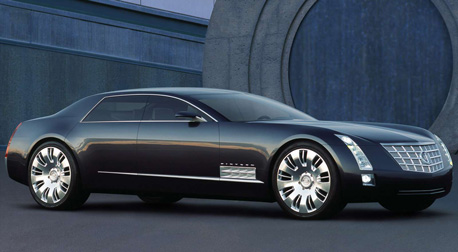
Cadillac XTS - Bottom of the 9th, bases are loaded. Here's the 3-2 pitch and.....

First thing I look at with a new car design are the angles and curves. I ignore interior, drivetrain and wheels. I envision it approaching, leaving,  driving by or simply parked. I then think about how it's exterior style stacks up against the competition and in the case of the XTS, that means stacking it up against the Germans. Can I drive it up to a successful CEO's home with it and look like I fit in? Or will I end up looking like a wannabe? Status afterall, can be important and as far a luxury cars are concerned, you are what you drive.

When I first saw the initial rendering of the XTS concept car, I was excited. It had a unique sleekness at every angle. It's rear end had paid tribute to the 1967 Cadillac Eldorado and it's long hood, short trunk overhang screamed business coupe. Wow I thought, this thing is going to make the Mercedes CLS look like a golf cart. But what happened to cause the concept car to come out looking like a bigger CTS at this year's NAIAS?

Before I start getting emails from some of my GM friends, please don't interpret my comment as implying that the Cadillac CTS is a bad car - it's not. It's just that the top of the line sedan in any luxury car company must NEVER borrow from it's lower models - NEVER. In actual fact, it should be the lower models trying to imitate the upper models. As soon as the lower models look similar, you re-design the upper model and the process starts over again. Take a look at what BMW and Mercedes - they've been doing this for years. 

Now I do like the side profile of the XTS at NAIAS - it's sexy, sleek and sophisticated. The interior is absolutely stunning. But why change the front and rear fascias so dramatically and more importantly to make the car resemble a lower priced Cadillac? I get the whole obtuse angle thing that Cadillac has been trying to throw into every model but honesty, it's starting to get long in the tooth. If I am going to pay a 10-20K premium for this car over the lower priced Cadillac, the last thing I want is for one of my golf buddies to yell "Hey Big H, did you just buy that? Nice CTS". Call me shallow but that would make me absolutely cringe. 

I love what is going on at Chevrolet and Buick right now as I see nothing but sales on the horizon. The GMC Granite was a nice surprise and holds plenty of promise. Cadillac? Well, we are just going to have to stick around and find out if the upcoming XTS is the clutch hitter a bat.


XTS Concept car.


crop this image

crop this image

crop this image

Cadillac XTS at 2010 NAIAS


Cadillac's 2010 CTS

Posted via web from Hylton Jorssen's posterous

Tuesday, January 19, 2010

The new GM - Taking the buying experience to a whole new level...

Many of GM's upper management have stated that one of the reasons for the old GM's failure was that they dropped the communication ball. They didn't listen to customers, dealers or employees for that matter because they thought knew what we all wanted. That practice taught them a valuable lesson and now, the new GM has done a complete 180 by initiating programs which ensure that the customer/dealer/GM relationship is nurtured and developed into a long term one.

One tiny example is an initiative developed by Mike Judge, a CAW Local 222 member and employee at GM's Oshawa, Ontario plant. He has come up with a unique way to thank GM customers who have purchased new camaros (which are built at his plant). "GM had been going through a nightmare last year and I just wanted to do something to show how much we appreciate the fact that many of them still had faith in us" says Mike "We realized that some of these folks were putting deposits down on our car's when they were not even sure if we would still be around. That's something we on the plant floor won't forget".

With the co-operation of his co-workers, Mike had a custom lithographs (designed by Dave Kimball) signed by those who have worked on a specific customers car. These customers then have a very unique piece of memorabilia which does nothing but strengthen the bond that the customer has to GM, it's emplyees and the car purchased. Due to the fact that this activity goes above and beyond Mike's daily responsibilities and that it is funded by only himself and his co-workers, it is just not feasable for him to provide this to all camaro purchasers. "We do have a criteria which determines who gets selected for one of these lithos but we do not publish it so that we can be as fair as possible".

One of the lucky few to receive a signed litho was Lisa Graves, of Baton Rouge, Louisianna. Lisa had ordered an Aqua Blue Chevrolet camaro SS which was built at Oshawa this past summer. "This car has absolutely changed my life and I had never imagined or anticipated the joy it would bring me. So when I received an email one evening informing me that I had been selected to receive one of the signed lithographs, I was just floored. It's something I will treasure always" says Lisa.

lisa_s_litho

Signed lithograph for Lisa Graves of Baton Rouge, Louisianna

Reaching out like this takes the customer relationship to a whole new level. Mike Judge's initiative alone has now created life long GM customers due to the increased bond his work creates between the customer, the vehicle and the GM employee. Hopefully, it's something which GM can implement North America and product wide. Thank you Mike Judge for thinking outside the box!

Mike Judge (left) with 4 GM customers who were selected to receive a signed Dave Kimball print of the new 2010 camaro

Posted via web from Hylton Jorssen's posterous

Saturday, January 16, 2010

Camarotracking.com - A new concept on how to communicate with the domestic auto industry's customers.


One of GM's current problems is how to keep new customers happy during the ordering and buying experience. I was able to experience this personally after ordering a new 2010 Camaro. The issue specifically was that as a customer, I was not given proper or accurate information in regards to when my vehicle was getting built and/or delivered. I would call my dealership or GM's Customer Service number only to get ambiguous or poorly detailed information.

There were so many Camaro buyers dismayed by the buying experience (due to back orders) that myself and a few other GM customers decided to create a website which allows GM customers to find as much information as possible regarding their current status on their ordered car. We created a website called www.camarotracking.com which is designed to let customers of the new Camaro track the status of their order and their car as it moves thru the production process.

The process is simple - the customer enters their production order number (a 6 character alphanumeric value given to every GM customer when ordering a car) and email address on the website:

As the car moves through the production process, they are automatically sent emails identifying the status change to their order. They can also view their current status online just entering their order number or email address in the track now box and clicking the track now button.

This example is typical and is an Equinox actually entered into our system.  As you can see the status is at 3000 and has a TPW of 1-11-2010. Once the car is built and a VIN issued it begins to be tracked by the VTIM data automatically with no new entry required by the customer or dealer.

 The customer can even view their online window sticker simply by clicking on their VIN number.  You might notice that a railcar number is provided along with the vehicles current status. This example is In-Transit from Oshawa and it began its journey on December 9th. The customer will receive their email update at each status change.The process for post production includes these stages for easy understanding.  On Hold if a Quality Control hold is placed,  Available to ship from location, In-Transit from location, Available to ship from rail yard, In-Transit from rail yard and of course Delivered to dealer.

The email process also has the ability for on-line marketing where GM can advertise GMPP products related to the product the customer has ordered. Metrics can also be added to the application which would allow GM to monitor regional sales activity, usage by customer, usage by dealership and end-to-end transaction time.

This easy to use system has helped over 10,000 Camaro customers and has increased the customer buying experience.  It has in fact been so well received and easy to use, that many Chevy Dealers across the county are using the system themselves. This includes the number one Chevy Dealer in the nation, Classic Chevrolet and other major dealers like Hendricks Chevrolet.  The benefit of being able to easily and automatically update themselves and their customers via the status update email, has allowed them to focus on selling cars, rather than trying to track down the status of an existing order via Global Connect or DBC which quite often, is not available to the floor salesman. Salespersons simply receive daily updates by the website which they can re-communicate to their customers. This not only saves time for the sales personnel, but it also makes it easier for them to keep the customer informed.

Camarotracking.com has also created a public forum on the site where people can anonymously ask questions, get special tracking information, updates or just spend time with people in the same situation as themselves. It gives them a sense of community and helps create a long term GM customer due to the customer becoming emotionally attached to the product even before they receive it. This unique process has never been executed in the past by GM. The excitement that customers express when they learn their "baby" has been built is proof alone that this type of service is needed at GM

The service is free and although initially focused on the Camaro, numerous other GM customers who ordered products such as the Equinox or Lacrosse are making tracking requests.  At this time, Camarotracking.com is only able to provide limited service to these customers up to the point that the VIN is issued. The full service is available to any GM Product Manager or Director who wishes to add this level of customer satisfaction to their portfolio. In fact, this service can easily adapt to any car manufacturers ordering process.

This entire process was created to mitigate the lack of communication regarding ordered vehicles while at the same time, create customer loyalty and customer satisfaction. It was made possible by the efforts of GM employees who are exactly what Ed Whitacre has been looking for. There are indeed dynamic and visual people hard at work at the new GM. Let's hope those folks get the credit they deserve and GM will see this service as revolutionary enough to implement corporate wide.

Posted via web from Hylton Jorssen's posterous

Yes, the direct Ebay selling was a disaster but the new GM's attempt to sell through the internet must continue...

Recently, many of you may have read about a trial program where General Motors attempted to sell their vehicles through Ebay. The reason for this was simple, GM had done enough research to know that a huge consumer base want the ability to buy a car directly from the internet to avoid the huge disappointment of dealing with a salesperson who knows less about the product than they do - (see side story "women turned off by dealers" http://www.autoremarketing.com/ar/news/story.html?id=10596). The Ebay trial turned out to be a dismal failure and nothing more than what many of it's dealers were already doing. Perhaps the idea to reach out directly to it's customers was correct but the manner in which they executed it was poor.

The hurdle GM (or any other car manufacturer) faces is that it cannot sell directly to the consumer because they are not legally allowed to due to federal and state franchise laws. State Franchise laws vary from state to state but generally are there to ensure that car manufacturers treat all dealerships in a vaguely defined term - "fair and equitable manner". Any activity to sell directly to the consumer without any dealer involvement would be seen as undermining the existing business relationship and dealer associations would have the car manufacturer dragged into court faster than a lotto winner signing his name on the winning ticket.

One possible solution is to create and online sales program which will gives dealerships the option of participating in. The program would work in a manner that allows the consumer to select the model/options they want followed with a small deposit (as is usually the case when dealing directly with a dealership). As for pricing, GM should be able to offer some price discount AND pay participating dealerships their full commission provided the vehicle can be in the consumers driveway within 30 days of the initial order (see my blog called "Pay your suppliers with post consumer money and watch profits soar).

As orders come in to GM through the Internet, they would be distributed to participating local dealerships in a similar manner as GM distributes it's allocations, thus ensuring a process that would abide by state franchise laws. As soon as the customer completes the transaction, the customer would receive a confirmation notice through a vehicle such as camarotracking.com which would return the order number and order status code. The dealer would receive notice through Global Connect telling with the customer and sold units particulars. Both the dealer and the customer would then be kept informed regularly through tracking software.

All Internet sales directed to a dealership would count against it's allocation for a particular product so that no dealership would be treated unfairly. Dealerships who do participate must turn the product over to the consumer within 24 hrs of the vehicle arriving to ensure a quick completion of the transaction. This would also limit the consumers exposure to only dealership activities that involve closing the deal, which is something that many consumers would appreciate.

It's a win-win for everyone involved. The dealer makes it's comission on it's allocation, the customer get's to order in a manner of preference, both the customer and dealership get regularily notified of the orders progress through camarotracking.com, and the dealer get's to focus more time on marketing and walk up activity. So is it possible for GM (or any other car manufacturer) to sell directly to the consumer? As long as the solution includes the participation of the dealership community so they can profit by the transaction, then absolutely!

Posted via web from Hylton Jorssen's posterous

Friday, January 15, 2010

Chevrolet at NAIAS - Where was the spark?

Perhaps you took in this week's NAIAS (North American Internation Auto Show) and were expecting something from Chevrolet which would blow your sox off. Maybe you wanted to see an 800hp version of the concept Corvette or perhaps a production model of the soon to be available SS camaro convertible.

Instead, we were given a presentation by Chevrolet General Manager Jim Campbell, which clearly demonstrated the future direction of Chevrolet's focus which is value, style and fuel saving. In case you missed it, here's the presentation: http://generalmotors.posterous.com/watch-the-chevrolet-press-conference-from-nai.

Well after watching this presentation, I have to say a resounding BRAVO!!! to Chevrolet. Presenting vehicles such as the Volt, Aveo RS, Spark and Cruise, really made a statement to the public that Chevrolet will once again, start building "bread and butter" cars - vehicles which the vast majority of North Americans will purchase. Bread and butter vehicles do not need to be flashy, they just need to be what the public wants at a given moment in time. Given the current and short term future of the global economy, combined with the long term escalation forcasts in the price of oil, it leaves little doubt that car companies should be focusing on affordability and fuel consumption.

When General Motors had it's 6 divisions in the '60's (Chevrolet, Pontiac, Oldsmobile, Buick, Cadillac and GMC), it's intention was to have a car for everyone and that as you progressed in life and became more successful, you would naturally trade in your Chevy for a Pontiac, then trade in your Pontiac for a Buick and so on until one day, you would have that shiney new Cadillac in the driveway which told all your neighbors "you made it". This was a good strategy and worked during the industrial age but as time went on, GM divisions decided to share platforms and options to save development.

This practice was so prevalent among divisions, that a unique term is now used to describe it - "Badge Engineering". The concept assumed that you could offer the same vehicle with a different name, change the grill, wheels and car color, wrap it around a unique marketing program and the consumer would believe it was a totally unique product. It did indeed save development costs but the consumer wasn't buying it (pardon the pun). Instead, they would look at one GM product and compare it to what Ford, Toyota or Honda was offering. GM had overestimated their dominance in the industry and underestimated the publics intelligence.

Obviously, the New GM has realized this past mistake and has gone back to what made the company strong in the 50's. Create core brands which are clearly unique from one another and give the consumer the ability to move from one brand to another, with a feeling that they have either moved up in vehicle class, or moved into another genre. Yes, old is new and Chevrolet is once again becoming the common man's vehicle - the vehicle which first car buyers, low income or retirees on a fixed income will consider.

So where was the Spark at this years NAIAS? It was right where it should have been - on stage at the Chevy presentation.....Chevrolet is obviously headed in the right direction.

Chevrolet Spark:

Chevrolet Aveo RS:

Chevrolet Cruise:

Chevrolet Volt:

Posted via web from Hylton Jorssen's posterous

Wednesday, January 13, 2010

GM should pay suppliers with post consumer money and watch the profits soar...

What does it take to make a domestic car company profitable? Many things really - some things are obvious to us but other things, which can make a dramatic difference to the companies bottom line, are things which get burried into company process and policy. One of those things, which the average consumer (and apparently GM manager) never looks at, is cash flow.

Cash flow, quite simply, is the amount of money an entity brings in vs. the amount of money an entity spends in a given period of time. If you spend more money in a month then you earn, you have negative cashflow. If you bring in more money than you spend, you have positive cash flow. This financial force is upon every business and person existing in a capitalist society (you and me) but it's impact is greatest felt by businesses that require large amounts of capital in order to offer a product or service. Automakers certainly fall into that high category since they require to spend billions of dollars (build a factory, product R&D) just to bring 1 single vehicle to market.

Right from the start, a car company is in the red for every model it brings to market. It hopes that over a few years, it can develop enough positve cash flow through sales of a particular model, to cover all of the initial and on-going cash demands and hopefully have a few bucks left over that would be registered as profit. That profit can actually increase per unit by simply changing when you pay your supplier and (in GM's case) when you get paid for your product.

To help you better understand this theory, let's take a look at the new camaro. I speak regularly to GM employees who work at the Oshawa plant as well as GM employees involved with the development of the product so my take on this is from that perspective. It takes no more than 5 days (on average) to build a camaro from start to finish. Very little of a camaro's parts are manufactured by GM anymore. In fact, the only thing that GM manufactures is the sheetmetal and the engine - that's it. Everything else is built by companies such as Magna, Martinrea, and American Axle, then transported to the plant for assembly. My point is not that a car plant has little to do since that's so far from the truth (watch "Ultimate Factories - Camaro" the next time it's on the SPEED channel) but rather that most of the parts and pre-assembled pieces from suppliers are on Net 30 payment terms.

What does this mean? Simply that GM has 30 days to pay the supplier from the date of invoice before incurring any additional costs such as interest, penalties or God forbid, part supply disruption. Most often, GM is invoiced every month by it's suppliers which means that a part supplied on December 1st, does not have to be paid for until January 31st. But for the sake of simplicity, let's just assume that GM get's invoiced with Net 30 terms the moment it receives a part for a car. As I indicated earlier, it takes 1 week to build a car and 3 weeks at the very max, to deliver a car to the dealer (continental US and Canada). If a dealer can get the car into the customers driveway within 24 hours, GM can actually pay the suppliers with the money they have earned from the sale of the unit!

This has an incredible impact to the bottom line because now, GM only needs to worry about it's engine and vehicle assembly costs before the car gets sold, not the cost to build the entire vehicle. This means that a car which costs GM 20K to build, may only require a 10K investment or cash outlay provided it can recoup the proceeds of the sale before the supplier invoices become due. Assuming 50% of the cars cost is due suppliers (I believe it is more), the unit profit is 50%! The more upscale the product, the more profit can be earned by the quick turn over. In some cases, profit can be 100% of initial investment. Keep in mind, that this only applies to vehicles which have been ordered before the car was built, not current inventory where carrying costs start to eat away at profit. Obviously, the quicker GM fills a pre-order, the more profit it will make.

So is the new GM doing anything to focus on quick turn over? To some degree yes (turn and earn program), but it's not enough and when required to decide between building a pre-ordered allocation vs. an unsold allocation, they will not take this valuable cash flow model into account. Instead, they argue that building pre-ordered cars from a small dealer before building inventory cars for a large volume dealer, violates state and federal franchise laws. That is why there are literally thousands of Equinox pre-order customers as I write this (those who actually went into the dealership and ordered a car) who currently have to wait months for their vehicle because some high volume dealership wants to put 20 Equinox vehicles on his lot so he can ask above MSRP for it. I'll cover this dealer problem as well as the whole allocation issue in a future article but for now, it should be clear that GM still has plenty of work to do in order to be profitable.


Posted via web from Hylton Jorssen's posterous